Quiet Tone Official Website › Guide
GuideHearing Supplement Guide: What The Evidence Shows
Six ingredients sold for ringing ears have been tested in human ears. Zinc failed a four-month trial and a Cochrane review. Ginkgo failed its own review. Magnesium has one small noise-exposure study. Niacin lost to placebo. Folate worked at 800 mcg a day over three years, and the B12 evidence used injections.
What has actually been studied, at what dose, and what came back — before any question of which bottle to buy.
The guideline that sits above this whole aisle
One recommendation, from the body that writes the guidance, about this exact symptom.
Before any ingredient is worth discussing, one document has to be on the table. The American Academy of Otolaryngology–Head and Neck Surgery Foundation clinical practice guideline on tinnitus tells clinicians they should not recommend dietary supplements for patients with persistent bothersome tinnitus. The guideline’s own plain-language summary says the same thing in fewer words.
That is not a fringe position or an old one. It is the professional body for ear, nose and throat medicine, addressing exactly the symptom this shelf is stocked for, and it reached that recommendation by reading the same trials this guide is about to walk through.
The reason to say it first rather than bury it is that everything below reads differently once it is in place. A guide that surveys twenty ingredients without mentioning the guideline is inviting a reader to conclude that the evidence is unsettled. It is settled enough for a recommendation.
It rules out buying a capsule as a treatment for persistent bothersome tinnitus. It does not rule out a nutrient being worth taking for its own sake, a sleep problem being worth addressing on its own terms, or somebody choosing to try something with a refund window attached. Those are different decisions and this guide keeps them apart.
The six ingredients with ear research, and what it found
The complete list of ingredients in this aisle with human ear trials behind them.
| Ingredient | The dose the research used | What came back |
|---|---|---|
| Zinc | 50 mg a day for four months, in a crossover trial | Not effective. A Cochrane review across three trials found no evidence either way |
| Ginkgo biloba | Standardised extract, across a Cochrane review | No convincing evidence of benefit for tinnitus as a primary complaint |
| Magnesium | 167 mg a day, against noise exposure | One small study, in a specific noise setting rather than in established ringing |
| Niacin / nicotinamide | Tested against placebo in 48 people | Did not beat placebo |
| Folate | 800 mcg a day for three years | Slowed age-related hearing decline in a Dutch trial. The strongest result here |
| Vitamin B12 | By injection, in deficient patients | A signal, but delivered by needle rather than by capsule |
Five of the six are negative, null or narrow. The sixth is not an ingredient any capsule on this shelf can deliver the way the study did.
Read that table twice, because the shape of it is the whole guide. The ingredient with the most convincing result, folate, is the one least often found on these panels. The ingredient most often found on them, zinc, is the one with a four-month trial concluding it does not work.
It is worth being precise about what a negative trial means. The zinc crossover trial gave 50 mg a day, four times what a typical multivitamin carries, and reported that zinc was not effective. The Cochrane review pooled three studies and concluded there was no evidence to say either way, which is a statement about the quality of the evidence rather than a verdict of harm.
The ginkgo review is the same story with a different plant. Ginkgo is the single most-sold tinnitus botanical in the world and its own systematic review does not support the use it is sold for.
The folic acid trial deserves the attention the others get. Three years, 800 mcg a day, in a population with low folate intake, measuring age-related hearing decline rather than ringing. It is a different endpoint and it is the best-conducted study in this whole survey.
Magnesium, and the difference between prevention and repair
What the magnesium trial actually tested, and why the setting matters more than the ingredient.
Magnesium is the one on the list whose evidence is most often overstated, and the overstatement is a category error rather than a fabrication.
The trial people are thinking of gave 167 mg a day to people about to be exposed to loud noise, and looked at whether it protected hearing through that exposure. A second line of work looked at magnesium alongside treatment for sudden hearing loss, which is an emergency handled in a clinic.
Neither is a study of somebody who has had a ringing in their ears for two years. Protecting an ear during an insult and quieting an ear afterwards are separate questions with separate answers, and a panel carrying magnesium is borrowing the reputation of the first to sell the second.
The dose matters as much as the setting. 167 mg a day is a substantial amount, and it is roughly thirteen times what a typical blended formula in this aisle carries. Where the form is magnesium oxide, which is the least absorbable of the common salts, the practical gap is wider than the arithmetic suggests.
The second proposition: sleep, anxiety and the things that travel with ringing
What these formulas are usually made of, and the honest way to weigh it.
Most formulas in this aisle are not really built from the six ingredients above. Open a panel and what you usually find is a calm-and-sleep stack: valerian, hops, passion flower, chamomile, lemon balm, GABA, L-theanine, magnolia, 5-HTP, ashwagandha.
That is a different proposition and it deserves to be judged as one rather than dismissed. Ringing is worse in a quiet room, worse when you are tired, and worse when you are anxious about it, and none of those observations is controversial. A formula aimed at sleep and at arousal is aiming at something real.
The evidence for that group is mixed and mostly modest. An umbrella review of valerian covers the sleep literature, the chamomile trial ran in generalised anxiety at 1,500 mg a day, the ashwagandha meta-analysis pools the anxiety work, and the L-theanine trial used 200 mg a day over four weeks.
Two cautions belong with the group. The first is dose: those trials used hundreds of milligrams of single ingredients, and a blend splitting a few hundred milligrams across fifteen names is not delivering any of them at trial strength. The second is that reviews of herbal insomnia remedies and reviews of herbal anxiolytics both conclude that the literature is thinner and lower in quality than the shelf implies.
- It is a sleep and arousal proposition, not an ear proposition. Judge it as one.
- Compare its total botanical weight against the dose ONE of those trials used. That comparison is usually decisive.
- Check whether the ingredients are named individually with amounts, or pooled into a single blend line.
- Look for St John’s wort specifically. It is common in this group and it changes how the body clears many prescription medicines.
- Remember that sleeping better is worth having whether or not the ringing moves.
The two interactions worth knowing before you buy anything in this aisle
Two ingredients common in this aisle that change how a prescription behaves.
St John’s wort is the first, and it is the most consequential ingredient on this whole shelf for reasons that have nothing to do with ears. It induces the enzymes and transporters that clear a long list of prescription medicines, which means it can quietly lower the concentration of a drug somebody is relying on. Hormonal contraception is the best-documented example, and NCCIH publishes a plain summary of the rest.
5-HTP is the second, and it matters mostly when it is found beside the first. It is a serotonin precursor, with its own literature, and two serotonergic ingredients in one capsule is worth naming to anybody already taking an antidepressant.
Neither of those is a reason to be frightened of a bottle. They are a reason to read a panel before swallowing it and to mention it at the next appointment, which is ordinary practice with any supplement and is not always as easy as it sounds when the ingredients are pooled inside a blend line.
A third, smaller one: zinc. Sustained high intake affects copper status, as the toxicity literature sets out, so the number to watch is the total across everything you take rather than the figure on any one panel.
Why every label in this aisle says almost nothing
Why the front of every bottle in this aisle is so carefully empty.
A dietary supplement sold in the United States may carry a structure or function claim, a sentence about supporting a body part, provided it does not claim to treat a disease. Tinnitus is a symptom with disease causes behind it, which makes the permissible sentence narrow and the impermissible one obvious.
So the labels hedge, and they hedge in a recognisable pattern: a word like support, an organ named vaguely, and a disclaimer beneath. Some go further and print nothing at all, letting a waveform or an ear-shaped mark carry the suggestion that the words avoid.
The regulator has acted where the hedging stops. The FDA has warned consumers about products sold as tinnitus cures, and a 2026 review of over-the-counter tinnitus products documents how common the practice remains.
The practical reading is simple. A vague claim is not evidence of a weak product, and a bold claim is evidence of a problem. What a label prints tells you about its legal caution rather than its contents, and the panel is where the contents are.
One further consequence is worth carrying into the next guide. Where a label claims nothing at all, there is nothing to hold it to, and the ceiling on what a retailer may say has to come from the category instead. That is why the guideline at the top of this page does so much work on this website.
What the same guideline recommends instead
The four things the same guideline recommends, none of which is sold on a shelf.
A guide that spends nine sections on what does not work owes the reader a paragraph on what the evidence does support, even though none of it is sold in a bottle.
The clinical practice guideline recommends education and counselling as a first step, so that somebody understands what they are hearing. It recommends a hearing evaluation and, where there is hearing loss, hearing aids, which frequently reduce how intrusive a ringing is. It supports sound therapy as an option and cognitive behavioural therapy where the distress is significant.
Population work on how common tinnitus is puts those recommendations in context: this is a very widespread symptom, most of it mild, and a substantial part of the distress is about attention and sleep rather than about the sound itself.
Surveys of supplement use in this population find that a great many people try a capsule first, which is understandable: it is available, it is private and it requires nobody’s permission. The honest note to end on is that it is the step with the least behind it, not the most.
- Get the ears looked at once, particularly if the ringing is new, one-sided, or comes with hearing loss or dizziness.
- Treat any hearing loss that is found. Hearing aids are the intervention with the most behind it.
- Work on sleep and on the attention loop, which is where the distress usually lives.
- Consider sound therapy, which is cheap to try and has no interactions.
- A supplement, if you want to try one, belongs after those rather than instead of them.
Sources behind this hearing supplement guide
Twenty-seven, which is most of what exists. The thinness of this literature is itself one of the guide’s findings.
- Tunkel DE, Bauer CA, Sun GH, et al. Clinical practice guideline: tinnitus. Otolaryngol Head Neck Surg. 2014;151(2 Suppl):S1-S40. PMID 25273878. https://pubmed.ncbi.nlm.nih.gov/25273878/
- Tunkel DE, Bauer CA, Sun GH, et al. Clinical practice guideline: tinnitus executive summary. Otolaryngol Head Neck Surg. 2014;151(4):533-41. PMID 25274374. https://pubmed.ncbi.nlm.nih.gov/25274374/
- Jarach CM, Lugo A, Scala M, et al. Global Prevalence and Incidence of Tinnitus: A Systematic Review and Meta-analysis. JAMA Neurol. 2022;79(9):888-900. PMID 35939312. https://pubmed.ncbi.nlm.nih.gov/35939312/
- Karkos PD, Leong SC, Arya AK, et al. 'Complementary ENT': a systematic review of commonly used supplements. J Laryngol Otol. 2007;121(8):779-82. PMID 17125579. https://pubmed.ncbi.nlm.nih.gov/17125579/
- Tinnitus. MedlinePlus Medical Encyclopedia, U.S. National Library of Medicine. https://medlineplus.gov/ency/article/003043.htm
- Vendra V, Vaisbuch Y, Mudry AC, et al. Over-the-Counter Tinnitus "Cures": Marketers' Promises Do Not Ring True. Laryngoscope. 2019;129(8):1898-1906. PMID 30585322. https://pubmed.ncbi.nlm.nih.gov/30585322/
- Menon R, Ziner J, Tolordava A, et al. Effectiveness of Over-The-Counter Treatments for Tinnitus Symptom Relief: A Systematic Review. Laryngoscope Investig Otolaryngol. 2026;11(2):e70398. PMID 41948711. https://pubmed.ncbi.nlm.nih.gov/41948711/
- Coelho C, Witt SA, Ji H, et al. Zinc to treat tinnitus in the elderly: a randomized placebo controlled crossover trial. Otol Neurotol. 2013;34(6):1146-54. PMID 23598691. https://pubmed.ncbi.nlm.nih.gov/23598691/
- Person OC, Puga ME, da Silva EM, et al. Zinc supplementation for tinnitus. Cochrane Database Syst Rev. 2016;11(11):CD009832. PMID 27879981. https://pubmed.ncbi.nlm.nih.gov/27879981/
- Dutta A, Chaudhary V, Kumari S, et al. Zinc-Induced Hematologic Toxicities: A Systematic Review of Descriptive Studies. Biol Trace Elem Res. 2026;204(9):6628-6642. PMID 42087025. https://pubmed.ncbi.nlm.nih.gov/42087025/
- Sereda M, Xia J, Scutt P, et al. Ginkgo biloba for tinnitus. Cochrane Database Syst Rev. 2022;11(11):CD013514. PMID 36383762. https://pubmed.ncbi.nlm.nih.gov/36383762/
- Attias J, Weisz G, Almog S, et al. Oral magnesium intake reduces permanent hearing loss induced by noise exposure. Am J Otolaryngol. 1994;15(1):26-32. PMID 8135325. https://pubmed.ncbi.nlm.nih.gov/8135325/
- Nageris BI, Ulanovski D, Attias J. Magnesium treatment for sudden hearing loss. Ann Otol Rhinol Laryngol. 2004;113(8):672-5. PMID 15330150. https://pubmed.ncbi.nlm.nih.gov/15330150/
- Hulshof JH, Vermeij P. The effect of nicotinamide on tinnitus: a double-blind controlled study. Clin Otolaryngol Allied Sci. 1987;12(3):211-4. PMID 2955964. https://pubmed.ncbi.nlm.nih.gov/2955964/
- Durga J, Verhoef P, Anteunis LJ, et al. Effects of folic acid supplementation on hearing in older adults: a randomized, controlled trial. Ann Intern Med. 2007;146(1):1-9. PMID 17200216. https://pubmed.ncbi.nlm.nih.gov/17200216/
- Singh C, Kawatra R, Gupta J, et al. Therapeutic role of Vitamin B12 in patients of chronic tinnitus: A pilot study. Noise Health. 2016;18(81):93-7. PMID 26960786. https://pubmed.ncbi.nlm.nih.gov/26960786/
- Hurtuk A, Dome C, Holloman CH, et al. Melatonin: can it stop the ringing? Ann Otol Rhinol Laryngol. 2011;120(7):433-40. PMID 21859051. https://pubmed.ncbi.nlm.nih.gov/21859051/
- Valente V, Machado D, Jorge S, et al. Does valerian work for insomnia? An umbrella review of the evidence. Eur Neuropsychopharmacol. 2024;82:6-28. PMID 38359657. https://pubmed.ncbi.nlm.nih.gov/38359657/
- Mao JJ, Xie SX, Keefe JR, et al. Long-term chamomile (Matricaria chamomilla L.) treatment for generalized anxiety disorder: A randomized clinical trial. Phytomedicine. 2016;23(14):1735-1742. PMID 27912875. https://pubmed.ncbi.nlm.nih.gov/27912875/
- Arumugam V, Vijayakumar V, Balakrishnan A, et al. Effects of Ashwagandha (Withania Somnifera) on stress and anxiety: A systematic review and meta-analysis. Explore (NY). 2024;20(6):103062. PMID 39348746. https://pubmed.ncbi.nlm.nih.gov/39348746/
- Hidese S, Ogawa S, Ota M, et al. Effects of L-Theanine Administration on Stress-Related Symptoms and Cognitive Functions in Healthy Adults: A Randomized Controlled Trial. Nutrients. 2019;11(10). PMID 31623400. https://pubmed.ncbi.nlm.nih.gov/31623400/
- Zhang W, Yan Y, Wu Y, et al. Medicinal herbs for the treatment of anxiety: A systematic review and network meta-analysis. Pharmacol Res. 2022;179:106204. PMID 35378276. https://pubmed.ncbi.nlm.nih.gov/35378276/
- Leach MJ, Page AT. Herbal medicine for insomnia: A systematic review and meta-analysis. Sleep Med Rev. 2015;24:1-12. PMID 25644982. https://pubmed.ncbi.nlm.nih.gov/25644982/
- Nicolussi S, Drewe J, Butterweck V, et al. Clinical relevance of St. John's wort drug interactions revisited. Br J Pharmacol. 2020;177(6):1212-1226. PMID 31742659. https://pubmed.ncbi.nlm.nih.gov/31742659/
- Berry-Bibee EN, Kim MJ, Tepper NK, et al. Co-administration of St. John's wort and hormonal contraceptives: a systematic review. Contraception. 2016;94(6):668-677. PMID 27444983. https://pubmed.ncbi.nlm.nih.gov/27444983/
- St. John's Wort. National Center for Complementary and Integrative Health, National Institutes of Health. https://www.nccih.nih.gov/health/st-johns-wort
- Maffei ME. 5-Hydroxytryptophan (5-HTP): Natural Occurrence, Analysis, Biosynthesis, Biotechnology, Physiology and Toxicology. Int J Mol Sci. 2020;22(1). PMID 33375373. https://pubmed.ncbi.nlm.nih.gov/33375373/
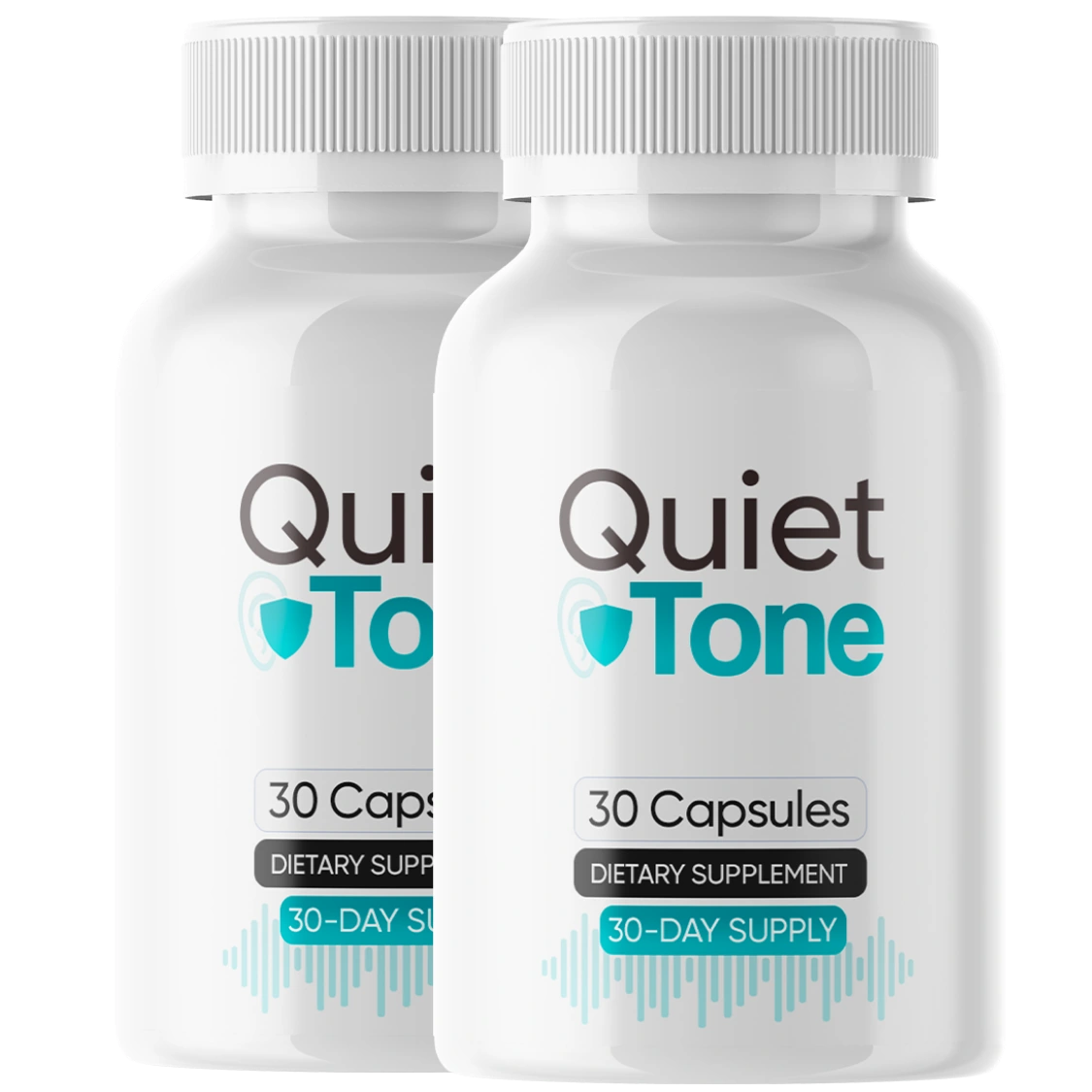
Quiet Tone, read against everything above
Nine printed amounts, an eighteen-part blend at 415.5 mg, and a 180-day window. The guide above is the context; the panel pages are the detail.
Two bottles $158 · six bottles $294 · 180-day money-back guarantee
Order Quiet Tone On The Official WebsiteOne capsule a day · 30 per bottle · lot QUI-26/GO-5005