Quiet Tone Official Website › Guides
GuidesHearing Supplement Guides
Two pieces of reading that are not about buying anything. The first sets out what the published research supports across this whole aisle, ingredient by ingredient, starting with the guideline that advises against the shelf entirely. The second is a scorecard of seven checks you can carry to any label in a shop or a browser tab.
An aisle whose own clinical guideline advises against it should have at least one page explaining why, written by somebody who sells into it.
The two guides
One survey of the evidence, one scorecard, and what each is good for.
What the evidence supports across hearing supplements
Six ingredients in this aisle have been tested in human ears. Five of those six came back negative, null or too thin to lean on, and the sixth was given by injection. The guide walks each one, says what dose the trial used, and separates the ear evidence from the sleep and anxiety evidence that most of these formulas are actually built from.
Seven checks to run on any hearing supplement label
Are the amounts printed or pooled into a blend? Is the plant part named? Does the amount match the dose the trial used? Does the ingredient have research in ears at all? Seven questions, each answerable from the panel in about a minute, applied at the end to the bottle this website sells.
Neither guide recommends a product, including this one. The first is a survey of what has been tested and what the results were. The second is a disclosure test: it measures how much a label tells you, which is a different question from whether the capsule works and a far easier one to answer honestly.
Both are written by this desk, which sells one of the bottles they describe. That is stated on every page here and it is the reason the scorecard applies its own checks to its own product in public rather than stopping at the general advice.
Who these guides are for
Five readers, including the one who will not buy anything.
- Somebody who has just started noticing a ringing and is working out whether a capsule is a reasonable first move. The short answer is in the first guide and it is not the answer a shelf would give.
- Somebody comparing two or three formulas and unable to tell them apart, because the front labels say similar things and the panels are where they differ.
- Somebody who already takes a prescription and wants to know which ingredients in this aisle have interactions worth raising.
- Somebody who reads a panel and wants to know what a proprietary blend total is actually telling them.
- Somebody who has decided against buying anything and wants the reasoning written down.
The last one is deliberate. An aisle whose own clinical practice guideline advises against it should have at least one page that explains why, written by somebody who sells into it. That page is the first guide.
What neither guide does is tell you what is causing your symptom. That is an examination, and three patterns in particular belong in one: ringing that arrives suddenly, ringing in one ear only, and ringing alongside hearing loss or dizziness.
Sources these guides start from
Four, and the first is the document both guides are written against.
- Tunkel DE, Bauer CA, Sun GH, et al. Clinical practice guideline: tinnitus. Otolaryngol Head Neck Surg. 2014;151(2 Suppl):S1-S40. PMID 25273878. https://pubmed.ncbi.nlm.nih.gov/25273878/
- Tunkel DE, Bauer CA, Sun GH, et al. Clinical practice guideline: tinnitus executive summary. Otolaryngol Head Neck Surg. 2014;151(4):533-41. PMID 25274374. https://pubmed.ncbi.nlm.nih.gov/25274374/
- Tinnitus. MedlinePlus Medical Encyclopedia, U.S. National Library of Medicine. https://medlineplus.gov/ency/article/003043.htm
- Jarach CM, Lugo A, Scala M, et al. Global Prevalence and Incidence of Tinnitus: A Systematic Review and Meta-analysis. JAMA Neurol. 2022;79(9):888-900. PMID 35939312. https://pubmed.ncbi.nlm.nih.gov/35939312/
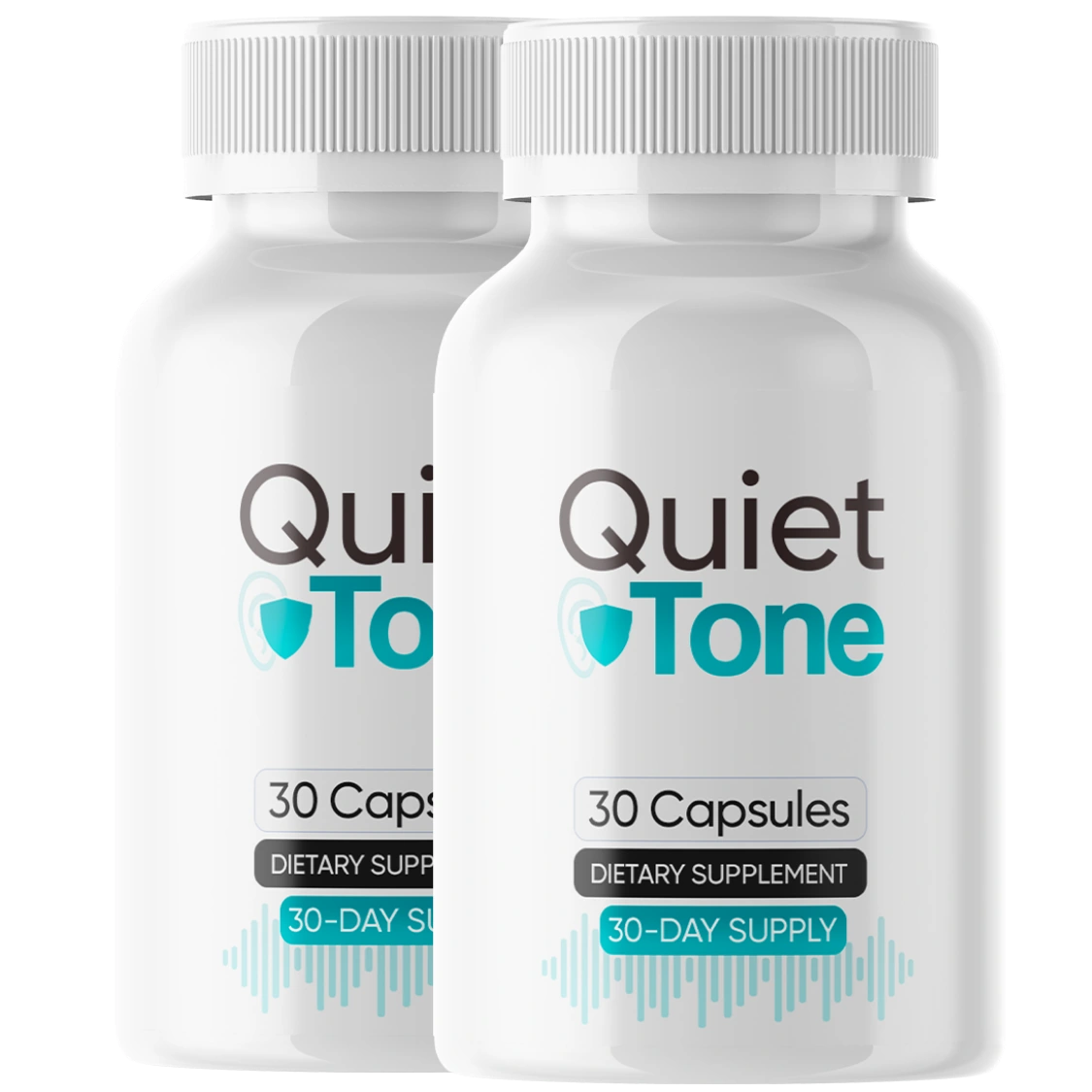
Read the guides first, then decide about Quiet Tone
Neither of them recommends this bottle. If you get to the end of both and still want to try it, 180 days from purchase is a long window to decide in.
Two bottles $158 · six bottles $294 · 180-day money-back guarantee
Order Quiet Tone On The Official WebsiteOne capsule a day · 30 per bottle · lot QUI-26/GO-5005