Quiet Tone Official Website › Guide
GuideChoosing A Hearing Supplement: Seven Checks
Seven questions you can answer from a panel in about a minute: are the amounts printed, is the plant part named, does the amount match the trial, does the ingredient have ear research at all, does the label make a claim, are the interactions flagged, and is there a refund route with a date on it.
A disclosure test rather than an efficacy test, then applied to the bottle this website sells.
Why a disclosure test, and not a better one
The difference between a question a label can answer and one it cannot.
Nobody reading a label can tell whether a capsule works. That question needs a trial of the finished product, and in this aisle almost nothing has one.
What a label can tell you is how much its maker is prepared to say. That is a narrower question and a far more answerable one, and it turns out to correlate with the things that matter: a panel that prints every amount can be checked against the research, and a panel that pools everything into one line cannot be checked at all.
So the seven checks below measure disclosure. A label passing all seven might still be a capsule with nothing behind it. A label failing four of them is one you cannot evaluate even in principle, which is a worse position to be in.
The seven checks
Seven questions in the order that resolves a label fastest.
1. Is an amount printed for every active?
The single most informative line on a panel. A named ingredient with a milligram beside it can be compared with the dose its published trial used. A name inside a proprietary blend cannot, because the blend total constrains all of them at once and none of them individually.
2. Is the plant part named?
Root, leaf, flower, fruit, seed, aerial. Different parts of the same plant carry different chemistry and are studied for different things, and a panel that says only the species name has left out the half that decides which literature applies.
3. Does the amount match the dose the trials used?
This is the check that costs most labels their reputation. Look up one ingredient, find the dose its trial used, and hold the two numbers side by side. A tenth of a trial dose is a gesture towards an ingredient rather than a dose of it.
4. Does the ingredient have research in EARS?
Many ingredients in this aisle have real research in another organ entirely. Lutein has a retina literature. Hawthorn has a heart failure literature. Being well studied somewhere else is not the same as being studied here, and a panel borrowing a reputation across organs should be read as doing so.
5. Does the label make a claim you can hold it to?
A vague claim is normal and legally cautious. No claim at all is unusual and cuts both ways: nothing overreaches, and nothing can be held to account either. A bold claim — cure, eliminate, restore — is the one real red flag, and the regulator has acted on it.
6. Are the interactions flagged anywhere?
A formula containing St John’s wort, 5-HTP or a high daily zinc should say so somewhere a buyer will see it, rather than leaving it to be discovered inside a blend line. A generic consult-a-physician caution is not a flag; it is boilerplate that appears on everything.
7. Is there a refund route with a date and a telephone number?
A window is only real if somebody answers. Look for a number of days, a route that reaches a person, a returns address, and a statement about who pays the postage. A guarantee with no mechanism behind it is a graphic.
Run those in order and most labels resolve in two minutes. Checks one and three are where the majority fall, and they fall together: a blend that prints no amounts cannot fail check three because it cannot be tested against it, which is precisely why check one comes first.
The seven checks applied to Quiet Tone
Seven rows, three of them failures, on the website that sells it.
| Check | Result | What the panel shows |
|---|---|---|
| 1. Every amount printed | Partial | Nine micronutrients carry an amount and a %DV. 18 more share one 415.5 mg blend line with no individual figure |
| 2. Plant part named | Pass | Root, flower, aerial, fruit, whole herb, bark, straw and seed are all named, and the rhodiola row says extract |
| 3. Amount matches the trial dose | Fail | Zinc is a quarter of the trial dose, magnesium a thirteenth, and the whole blend is smaller than one chamomile trial dose |
| 4. Ear research behind the ingredient | Fail | The three rows with ear trials all came back negative. The blend’s evidence is sleep and anxiety, and the lutein’s is retinal |
| 5. A claim you can hold it to | Unusual | The artwork prints no benefit sentence at all. Nothing overreaches; nothing can be held to account either |
| 6. Interactions flagged | Fail | St John’s wort and 5-HTP sit inside the blend line, and the artwork carries only the generic caution |
| 7. Refund route with a date | Pass | 180 days from purchase, a telephone number, a returns address and a stated postage rule |
Two passes, one partial, one unusual and three failures, every one of them checkable against the label artwork.
That is a poor scorecard, and publishing it on the website that sells the bottle is the only thing that makes the two passing rows worth reading. A page scoring its own product seven out of seven would be telling you about its author rather than about its product.
The three checks Quiet Tone fails, in detail
Three failures, with the numbers that produce each one.
Check 3: the amounts do not match the trials
This is the largest gap and the arithmetic is not close. The zinc tinnitus trial used 50 mg a day for four months; this panel carries 12.5 mg. The magnesium study used 167 mg; this panel carries 12.5 mg of magnesium oxide.
Inside the blend the gap is wider still. The chamomile anxiety trial used 1,500 mg a day, which is more than three times the entire 415.5 mg line, for one of its 18 parts.
Check 4: the ear research is negative
Three ingredients on this panel have been tested in ears. Zinc came back with no evidence across three trials, niacin did not beat placebo in 48 people, and the magnesium work is a noise-exposure setting rather than established ringing.
The remaining evidence on this panel is real but belongs elsewhere: sleep and anxiety for the botanical group, and the retina for the lutein.
Check 6: the interactions are inside the blend
St John’s wort is one of the eighteen names, and it changes how the body clears many prescription medicines, hormonal contraception included. 5-HTP is in the same line.
The artwork carries the ordinary caution about a known medical condition and nothing specific to either. A buyer on a prescription has to read the ingredient list and know what those two names mean, which is a lot to ask of a label.
None of those three is hidden. All of them are readable off the bottle by somebody who knows what to look for, which is the whole argument for a scorecard: the information is there, and the checks are what turn it into a judgement.
The checks Quiet Tone passes, and what they are worth
Six things this label discloses, set against six it leaves open.
What this label discloses well
- Every plant part is named, throughout. Root, flower, aerial, fruit, bark, straw, seed and whole herb all appear, which is more than a good deal of this aisle bothers with.
- The rhodiola row says extract rather than only the root, which tells a reader they are looking at a concentrate rather than ground plant.
- The nine micronutrient rows carry both an amount and a percentage, so each can be checked against a Daily Value without arithmetic.
- Two chemical forms are specified: pantothenic acid as D-calcium pantothenate and niacin as niacin, which is information most panels omit.
- The other-ingredients line is printed, which settles the capsule-shell question without anybody having to write in and ask.
- 180 days from purchase, on every pack, with a telephone number and a returns address behind it.
What it leaves unanswerable
- The blend line pools eighteen ingredients into one total, which makes check three unanswerable for most of the formula.
- The ladder starts at two bottles, so there is no small first purchase to test it with.
- Four seals ship on the pack and three of them name nobody.
- The review summary carries three comment texts across eight named buyers.
- No certificate of analysis is published, only a lot and a reference.
- The artwork’s waveform and ear mark suggest a use case its words never state.
The passing rows are not trivial. A panel naming every plant part is doing something useful, and it is the reason the ingredient pages on this website can be specific about which literature applies to which row.
The 180-day window is the other genuine strength, and it is worth being precise about why. It is longer than any trial behind these ingredients ran for, which means a buyer can run the experiment properly and still ask for the money back afterwards. That is unusual in this aisle and it is a purchase policy rather than a statement about the formula.
Using the seven checks on any other label
What usually breaks first, and the order to ask the questions in.
Take the checks to the next bottle and the order matters. Check one first, because a proprietary blend collapses checks two, three and four into a single unanswerable question. Where everything is printed, check three next, because it is the one that resolves fastest and the one most labels fail.
Checks five and six can be run from the front of the pack and the caution text in under a minute. Check seven usually needs the seller’s website rather than the bottle, and the thing to look for is a number of days and a route that reaches a person.
What usually breaks first, in this aisle specifically, is the dose. Blended calm formulas are built to a price and to a capsule size, and neither of those constraints leaves room for the doses the underlying trials used. A critical appraisal of how herbal remedies should be evaluated is the best short statement of why that matters.
What this checklist cannot tell you
Five questions the seven checks were never built to answer.
- Whether the formula works. A label can pass all seven and still be a capsule with no trial behind the finished product, which describes almost everything in this aisle.
- Whether the amount in the capsule is the amount on the panel. That is a laboratory question, and a printed figure is a declaration made at manufacture.
- Whether an ingredient suits you personally. Interactions and existing conditions are a conversation with whoever prescribes for you.
- Whether the price is fair. Cost per day is separate arithmetic, and a cheap capsule at a tenth of a trial dose is not a bargain.
- Whether your symptom needs something else entirely. That is the one question worth settling before any of the other six.
The checklist is a disclosure test rather than an efficacy test, and keeping the two apart is the whole discipline. MedlinePlus covers what tinnitus is and what causes it, the clinical practice guideline covers what a first assessment involves and what it recommends instead, and the companion guide covers what the evidence supports ingredient by ingredient.
Sources behind these seven checks
Eleven, and every figure in the scorecard above traces to one of them or to the label artwork.
- Tunkel DE, Bauer CA, Sun GH, et al. Clinical practice guideline: tinnitus. Otolaryngol Head Neck Surg. 2014;151(2 Suppl):S1-S40. PMID 25273878. https://pubmed.ncbi.nlm.nih.gov/25273878/
- Tinnitus. MedlinePlus Medical Encyclopedia, U.S. National Library of Medicine. https://medlineplus.gov/ency/article/003043.htm
- Vendra V, Vaisbuch Y, Mudry AC, et al. Over-the-Counter Tinnitus "Cures": Marketers' Promises Do Not Ring True. Laryngoscope. 2019;129(8):1898-1906. PMID 30585322. https://pubmed.ncbi.nlm.nih.gov/30585322/
- Coelho C, Witt SA, Ji H, et al. Zinc to treat tinnitus in the elderly: a randomized placebo controlled crossover trial. Otol Neurotol. 2013;34(6):1146-54. PMID 23598691. https://pubmed.ncbi.nlm.nih.gov/23598691/
- Person OC, Puga ME, da Silva EM, et al. Zinc supplementation for tinnitus. Cochrane Database Syst Rev. 2016;11(11):CD009832. PMID 27879981. https://pubmed.ncbi.nlm.nih.gov/27879981/
- Hulshof JH, Vermeij P. The effect of nicotinamide on tinnitus: a double-blind controlled study. Clin Otolaryngol Allied Sci. 1987;12(3):211-4. PMID 2955964. https://pubmed.ncbi.nlm.nih.gov/2955964/
- Attias J, Weisz G, Almog S, et al. Oral magnesium intake reduces permanent hearing loss induced by noise exposure. Am J Otolaryngol. 1994;15(1):26-32. PMID 8135325. https://pubmed.ncbi.nlm.nih.gov/8135325/
- Mao JJ, Xie SX, Keefe JR, et al. Long-term chamomile (Matricaria chamomilla L.) treatment for generalized anxiety disorder: A randomized clinical trial. Phytomedicine. 2016;23(14):1735-1742. PMID 27912875. https://pubmed.ncbi.nlm.nih.gov/27912875/
- Keenan TDL, Agron E, Keane PA, et al. Oral Antioxidant and Lutein/Zeaxanthin Supplements Slow Geographic Atrophy Progression to the Fovea in Age-Related Macular Degeneration. Ophthalmology. 2025;132(1):14-29. PMID 39025435. https://pubmed.ncbi.nlm.nih.gov/39025435/
- Nicolussi S, Drewe J, Butterweck V, et al. Clinical relevance of St. John's wort drug interactions revisited. Br J Pharmacol. 2020;177(6):1212-1226. PMID 31742659. https://pubmed.ncbi.nlm.nih.gov/31742659/
- Izzo AA, Hoon-Kim S, Radhakrishnan R, et al. A Critical Approach to Evaluating Clinical Efficacy, Adverse Events and Drug Interactions of Herbal Remedies. Phytother Res. 2016;30(5):691-700. PMID 26887532. https://pubmed.ncbi.nlm.nih.gov/26887532/
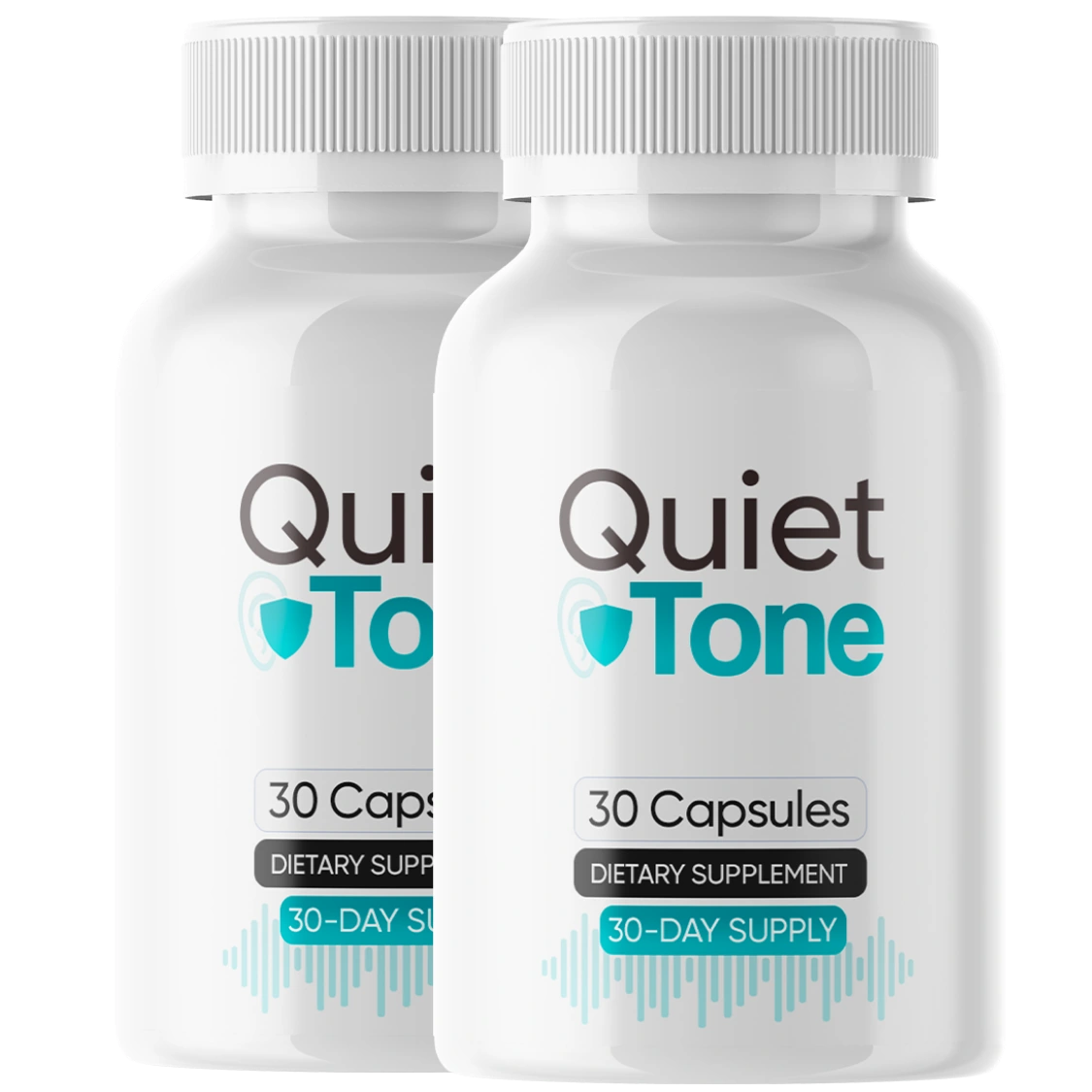
Order Quiet Tone with the scorecard in front of you
Two passes, one partial and three failures, all of them checkable against the printed panel. Packs run $49 to $79 a bottle with 180 days from purchase to change your mind.
Two bottles $158 · six bottles $294 · 180-day money-back guarantee
Order Quiet Tone On The Official WebsiteOne capsule a day · 30 per bottle · lot QUI-26/GO-5005