Quiet Tone Official Website › Blog › Zinc For Tinnitus
Zinc For Tinnitus: What The Trials Actually Found
Zinc is on almost every panel in this aisle, and it is the one ingredient here whose question has actually been asked and answered. A four-month trial gave four times this amount and reported that it did not work.
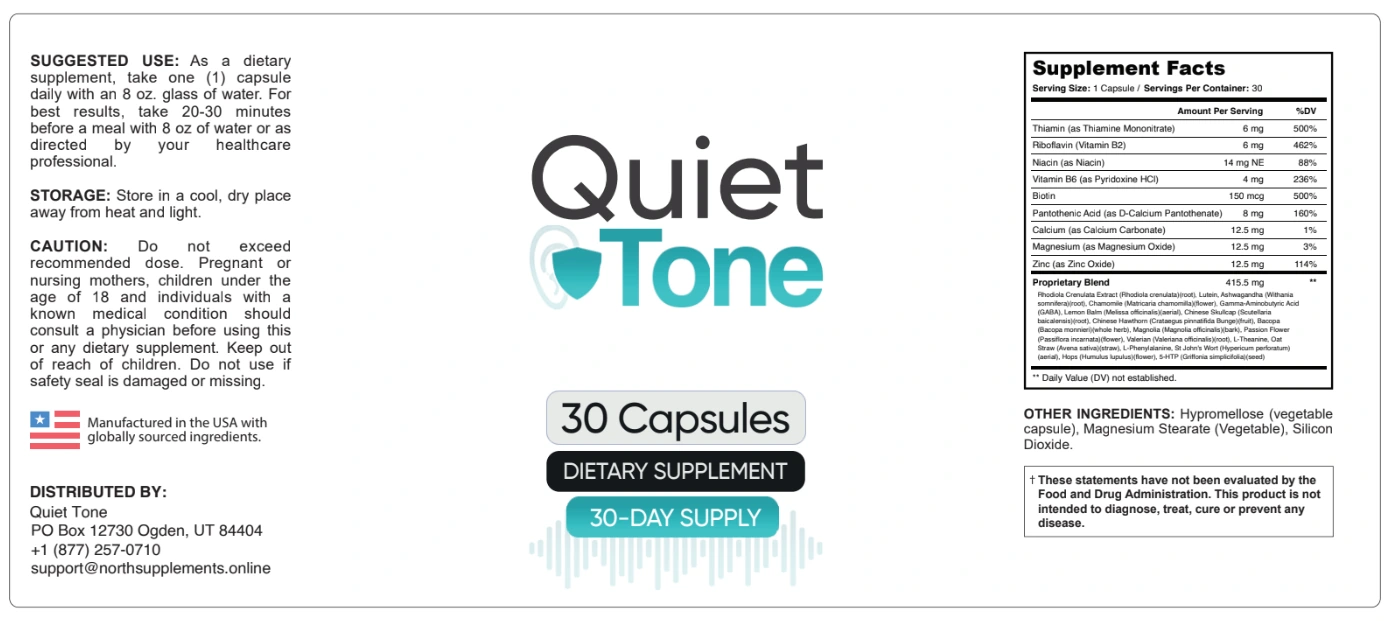
- A crossover trial gave 50 mg of zinc a day for four months and concluded it was not effective for tinnitus.
- A Cochrane review pooled the controlled trials and found no evidence either way.
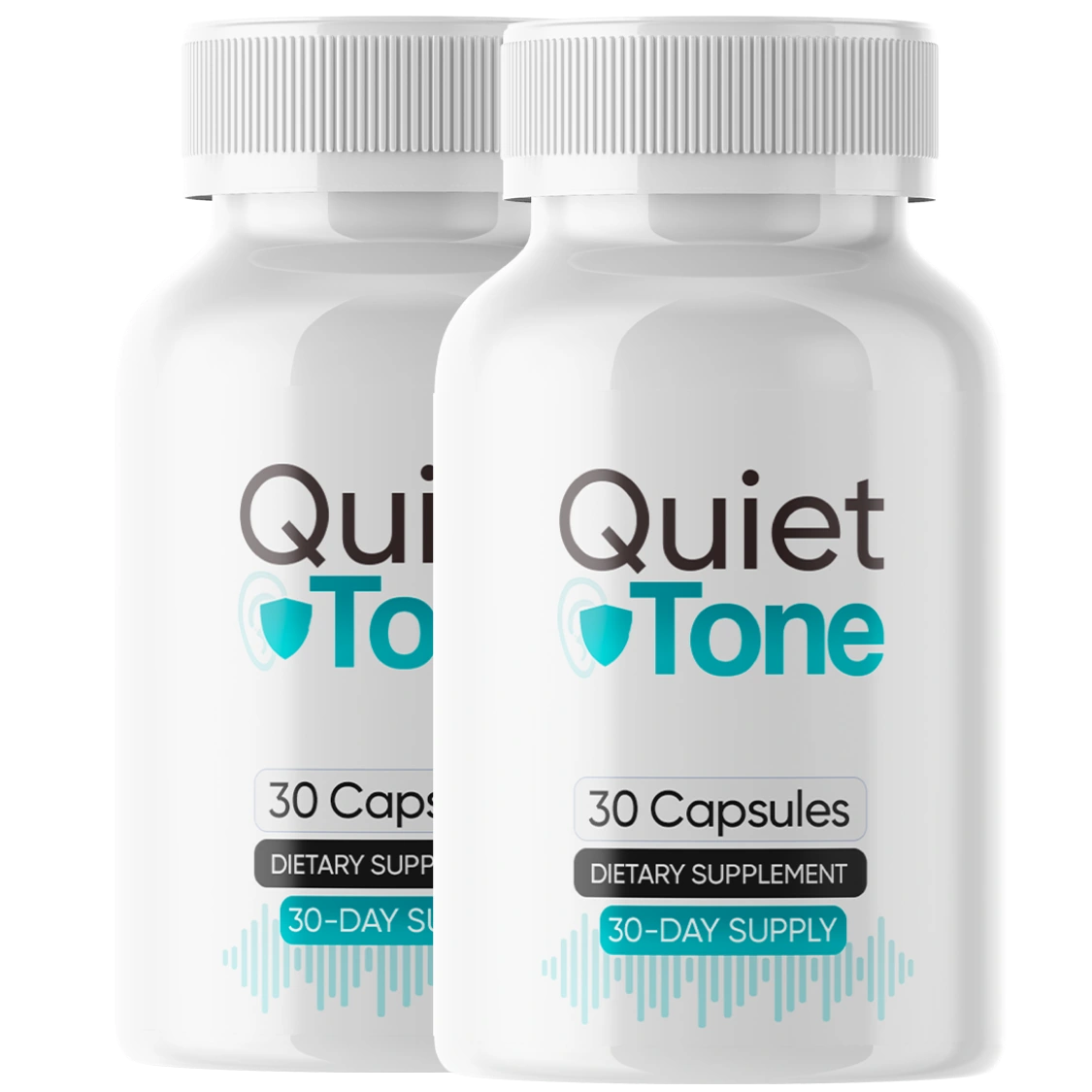
- This panel carries 12.5 mg, a quarter of that trial dose, as zinc oxide.
- 114% of the Daily Value is a nutrient amount, and it is a perfectly ordinary thing for a multivitamin row to be.
- The figure worth watching is your daily total across everything, because sustained high zinc affects copper.
Why zinc ended up in every formula in this aisle
The reasoning is old, coherent and worth understanding before it is set aside. Zinc is present in the cochlea at unusually high concentrations, it is involved in the function of the auditory system, and a series of observational studies in the 1980s and 1990s reported lower zinc levels in people with tinnitus than in people without it.
That is a genuine hypothesis rather than marketing. If a deficiency accompanies a symptom, correcting the deficiency is an obvious thing to try, and researchers did try it.
What happened next is the part that rarely reaches a sales page. The hypothesis was tested properly, and it did not hold up. That is how science is supposed to go, and the result is just as informative as a positive one would have been.
Surveys of supplement use in this population find that a large proportion of people with tinnitus try a capsule, and zinc is among the most common things in the capsule. The gap between how often it is taken and how well it has performed in trials is the subject of this post.
What the trials actually ran
| The study | What it did | What it found |
|---|---|---|
| The crossover trial | 50 mg of zinc a day for four months, against placebo, in adults with tinnitus | Zinc was not effective |
| The Cochrane review | Pooled the controlled trials of zinc supplementation for tinnitus | No evidence to say whether zinc helps or not |
| The clinical practice guideline | Reviewed the whole supplement literature for this symptom | Clinicians should not recommend dietary supplements for persistent bothersome tinnitus |
| The toxicity literature | Examined sustained high zinc intake | Affects copper status over time, which is why the daily total matters |
Four records, and the first two are the ones that answer the question this post is named for.
The crossover trial
The crossover trial is the most direct test of the question. Participants with tinnitus received 50 mg of zinc a day for four months and placebo for a matched period, each acting as their own control. The design is a good one for a symptom that fluctuates, because it removes the between-person variation that makes tinnitus trials difficult.
The conclusion was that zinc was not effective. Not that the result was unclear, and not that a larger study was needed to tell — that zinc at 50 mg a day for four months did not do what it was given to do.
The Cochrane review
The Cochrane review took a wider view and reached a more cautious verdict: there is no evidence to determine whether zinc supplementation helps tinnitus. That is a statement about the size and quality of the literature rather than a verdict against the ingredient.
The two conclusions are compatible and both belong on the table. One well-designed trial says no; the pooled body of evidence says there is not enough of it to be sure. Neither is a reason to expect much from a capsule.
The guideline above both
The clinical practice guideline on tinnitus read this literature alongside everything else in the aisle and told clinicians not to recommend dietary supplements for persistent bothersome tinnitus. That recommendation is the ceiling on this whole website and it is quoted here rather than argued with.
The Quiet Tone panel, row by row
Nine printed rows with an amount and a percentage, including the zinc discussed above, then one blend line of 415.5 mg. Every row set beside the dose its research used.
Two bottles $158 · six bottles $294 · 180-day money-back guarantee
Order Quiet Tone On The Official WebsiteOne capsule a day · 30 per bottle · lot QUI-26/GO-5005
Reading the 12.5 mg row on this bottle
| What this panel prints | What the trial used | The difference |
|---|---|---|
| Zinc (as zinc oxide) | Zinc, form varies by study | Zinc oxide is the cheapest common form and among the least absorbable |
| 12.5 mg per capsule | 50 mg a day | A quarter of the amount, before absorption is considered |
| 114% of the Daily Value | Well above the Daily Value, deliberately | This row is a nutrient dose. The trial used a therapeutic one |
| One capsule a day | Four months of daily dosing | The duration matches. The amount does not |
The left column is read off the label artwork. The middle column is what the published trial ran, not a prediction about this capsule.
Three things follow from that table and they should be taken in order.
First, 12.5 mg is a quarter of the trial dose. Whatever one thinks of the trial, a formula carrying a quarter of an amount that did not work is not positioned to do better.
Second, 114% of the Daily Value is entirely reasonable as a nutrient row. A great many multivitamins carry a similar figure, and there is nothing unusual or excessive about it in isolation.
Third, those two sentences are not in conflict. This row is a sensible nutrient dose and it is not a therapeutic one, and the confusion in this aisle comes almost entirely from labels that let a reader assume the second while delivering the first.
Zinc oxide, and why the form matters
The label specifies zinc as zinc oxide, which is worth noticing. Zinc oxide is the cheapest of the common zinc forms and among the least readily absorbed; picolinate, citrate and gluconate all generally do better in absorption comparisons.
That does not make zinc oxide useless. It is used in a great many supplements and it does deliver zinc. But it widens a gap that was already wide: a quarter of the trial dose in a form that absorbs less well than the alternatives is further from 50 mg than the arithmetic alone suggests.
Naming the form at all is a point in the label’s favour. A panel that prints only “Zinc” has told a reader less than this one has, and the same is true of the calcium and magnesium rows, both of which name their salts.
The number to watch is the total, not the row
There is one genuinely practical thing to take from this page, and it is not about tinnitus.
The toxicity literature on zinc describes what sustained high intake does, and the mechanism that matters at ordinary supplement doses is copper. Zinc and copper compete for absorption, and a high daily zinc intake maintained over months can lower copper status.
12.5 mg from one capsule is not a concern on its own. The arithmetic to do is the total: a multivitamin, a separate zinc tablet, a fortified cereal and this capsule can add up to a figure worth knowing about, and none of those labels knows about the others.
- Add up every source of zinc you take daily, not just this one.
- A multivitamin typically carries 8 to 15 mg, which roughly doubles this row on its own.
- Separate zinc lozenges and cold remedies can carry considerably more.
- The concern is sustained intake over months rather than any single day.
- Anyone already taking a zinc supplement has the clearest reason of all to read this panel before adding it.
What the zinc row is not being accused of
Fairness costs nothing here and it is worth spending.
The zinc row is not overdosed. At 114% of the Daily Value it is a normal supplement amount and well below any published ceiling for adults.
It is not undeclared. The amount, the percentage and the chemical form are all printed, which is exactly what this website spends most of its pages asking for.
And it is not an unreasonable ingredient to include in a formula aimed at this symptom. The hypothesis behind it was a real one, argued by researchers rather than by marketers, and the fact that it did not survive testing is not the formulator’s fault.
What can fairly be said is that a buyer reading “zinc” on a tinnitus formula and assuming there is research behind that choice will find, on looking it up, that the research says no.
What would change this assessment
- A trial of zinc at a nutrient dose over a longer period, which has not been run.
- A trial in people who are actually zinc deficient, which is the population the original hypothesis was about and which the existing trials did not select for.
- A finished-product trial of this capsule, which does not exist and almost certainly never will.
- A revision of the clinical practice guideline, which would require new evidence rather than a new reading of the old evidence.
None of those is imminent, and this page will be updated if any of them arrives. Until then the honest summary is short: zinc is the ingredient in this aisle whose question was asked properly, and the answer came back no.
References
- Coelho C, Witt SA, Ji H, et al. Zinc to treat tinnitus in the elderly: a randomized placebo controlled crossover trial. Otol Neurotol. 2013;34(6):1146-54. PMID 23598691. https://pubmed.ncbi.nlm.nih.gov/23598691/
- Person OC, Puga ME, da Silva EM, et al. Zinc supplementation for tinnitus. Cochrane Database Syst Rev. 2016;11(11):CD009832. PMID 27879981. https://pubmed.ncbi.nlm.nih.gov/27879981/
- Dutta A, Chaudhary V, Kumari S, et al. Zinc-Induced Hematologic Toxicities: A Systematic Review of Descriptive Studies. Biol Trace Elem Res. 2026;204(9):6628-6642. PMID 42087025. https://pubmed.ncbi.nlm.nih.gov/42087025/
- Tunkel DE, Bauer CA, Sun GH, et al. Clinical practice guideline: tinnitus. Otolaryngol Head Neck Surg. 2014;151(2 Suppl):S1-S40. PMID 25273878. https://pubmed.ncbi.nlm.nih.gov/25273878/
- Karkos PD, Leong SC, Arya AK, et al. 'Complementary ENT': a systematic review of commonly used supplements. J Laryngol Otol. 2007;121(8):779-82. PMID 17125579. https://pubmed.ncbi.nlm.nih.gov/17125579/