Quiet Tone Official Website › Blog › 415.5 Milligrams, Eighteen Ways
What 415.5 Milligrams Split Eighteen Ways Actually Buys
One line on this panel carries eighteen botanicals and amino acids and a single total. Dividing that total by that count is the most useful thirty seconds anyone can spend on this label, and it is arithmetic rather than opinion.
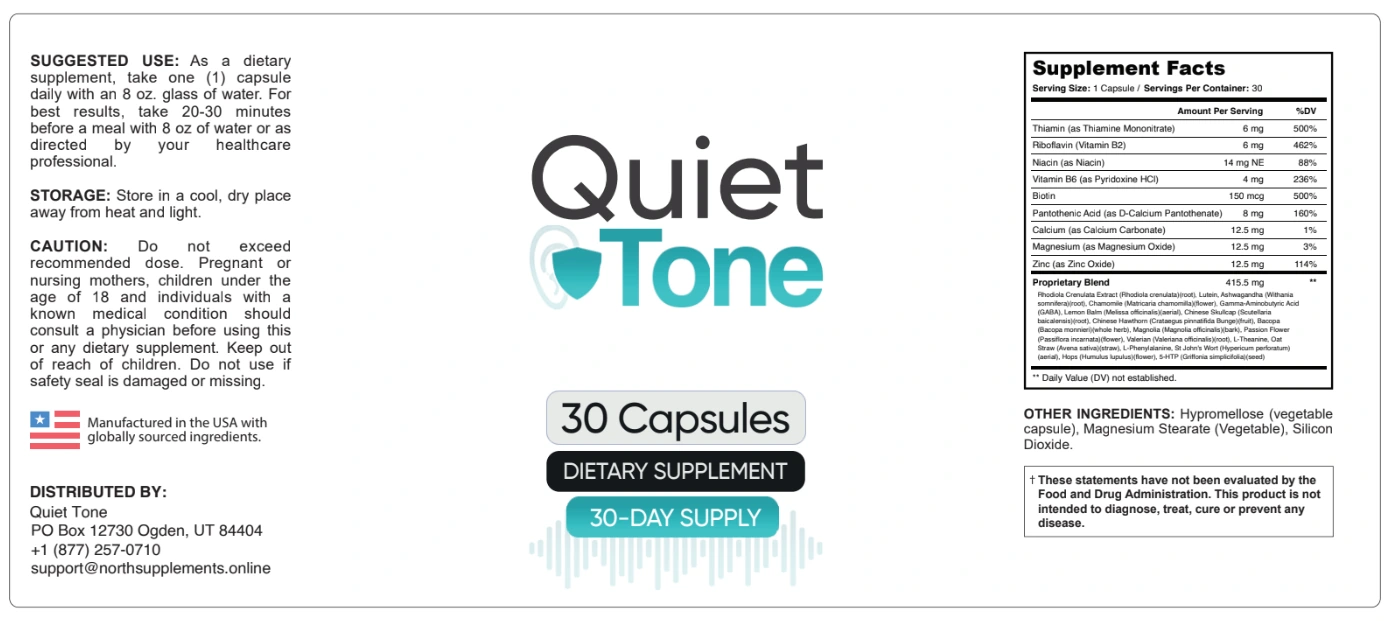
- Eighteen ingredients share one 415.5 mg total, and no individual amount is published for any of them.
- Divided evenly that is about 23 mg each, though nothing obliges a blend to be even.
- The chamomile anxiety trial used 1,500 mg a day for one ingredient, which is more than three times this entire line.
- Label order conventionally runs heaviest first, which is information but not a figure.
- A proprietary blend is lawful and ordinary. What it does is move the panel from checkable to unbounded.
One line, eighteen names
Turn a bottle of this kind over and the Supplement Facts box usually resolves into two different species of row. The first kind names one ingredient and puts a weight beside it. The second kind names a group, puts one weight beside the group, and then lists the members underneath with nothing beside any of them.
This panel has nine of the first and one of the second. The nine are vitamins and minerals, each with an amount and a percentage of the Daily Value. The one is headed Proprietary Blend, weighs 415.5 mg, and contains eighteen botanicals and amino acids.
| Position on the line | The name as the label prints it | What it is usually sold for |
|---|---|---|
| 1 | Rhodiola Crenulata Extract (root) | An adaptogen, sold for fatigue and stress |
| 2 | Lutein | A carotenoid, studied in the retina |
| 3 | Ashwagandha (root) | An adaptogen, sold for stress and sleep |
| 4 | Chamomile (flower) | A traditional calming herb |
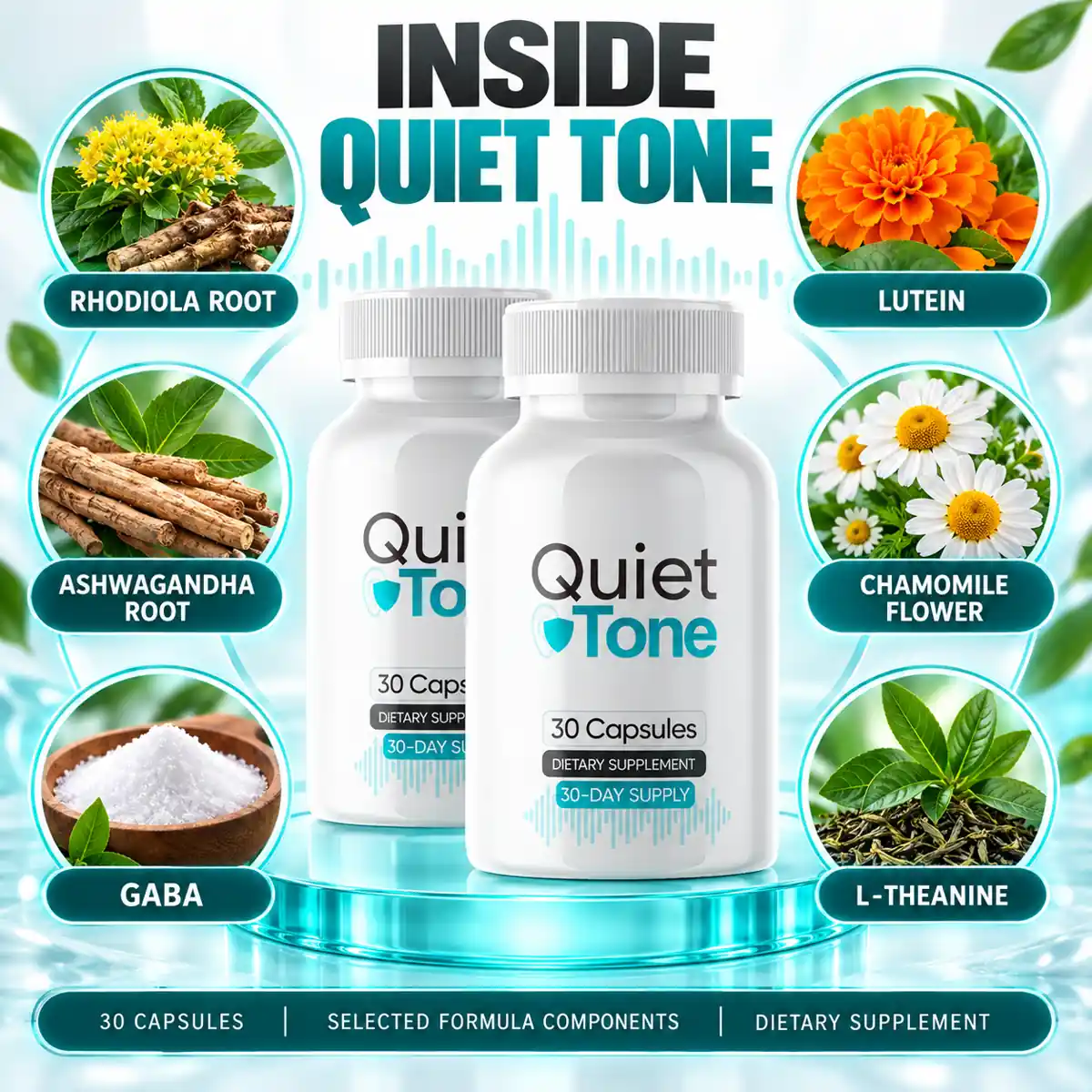
| 5–9 | GABA, lemon balm, Chinese skullcap, Chinese hawthorn, bacopa | Calm, sleep, a cardiac herb and a memory herb |
| 10–14 | Magnolia, passion flower, valerian, L-theanine, oat straw | The core of the sleep and relaxation group |
| 15–18 | L-phenylalanine, St John’s wort, hops, 5-HTP | Amino acids and two ingredients that act on serotonin |
Label order, which by convention runs from most to least by weight. The convention is not a published figure and nothing can be worked backwards from it.
Read as a shopping list it is a familiar one. Ten or eleven of the eighteen are the standard calm-and-sleep group that turns up in almost every relaxation formula sold, two are adaptogens, two act on serotonin, one is a carotenoid usually studied in the eye and one is a cardiac herb.
The division, done out loud
415.5 divided by 18 is 23.08. Round it and each ingredient averages about 23 milligrams, if the blend were split evenly.
It almost certainly is not. Blends are formulated, not shared out, and the convention that puts the heaviest first means the rhodiola at position one is probably carrying considerably more than the 5-HTP at position eighteen. But an average is the only figure anybody outside the formulation room can compute, and computing it is the point: it establishes the order of magnitude everything else has to fit inside.
Twenty-three milligrams is a small amount of a botanical. It is a quarter of a teaspoon of almost nothing, and the trials that gave these plants their reputations were not run at anything like it.
It is an upper bound on all eighteen at once. No ingredient on that line can weigh more than 415.5 mg, and the seventeen others have to fit in whatever is left. That is genuine information and it is the whole of what a blend total provides.
Why a proprietary blend exists at all
Three reasons are usually given and two of them are real.
The first is competitive. A formula with every amount printed can be copied by anybody with a label and a manufacturer, and a company that spent money arriving at a ratio would rather not hand it over. That is a straightforward commercial argument and it is not dishonest.
The second is practical. Botanical extracts vary between harvests and between suppliers, and a manufacturer that prints an exact milligram for eighteen separate inputs is committing to something harder to hit than a single total.
The third is the one nobody says out loud: a blend makes a formula impossible to evaluate. A reader cannot compare any row against any trial, so a panel with eighteen impressive names on it reads as impressive regardless of what is actually in there.
All three can be true at once. A blend is not evidence of anything being hidden, and it is also the reason nothing can be checked. Both halves of that sentence matter.
What the law requires
A proprietary blend must name every ingredient in it, in descending order by weight, and must declare the total. It does not have to declare the individual amounts. This label does exactly what is required, which is worth saying plainly: nothing about that line is irregular.
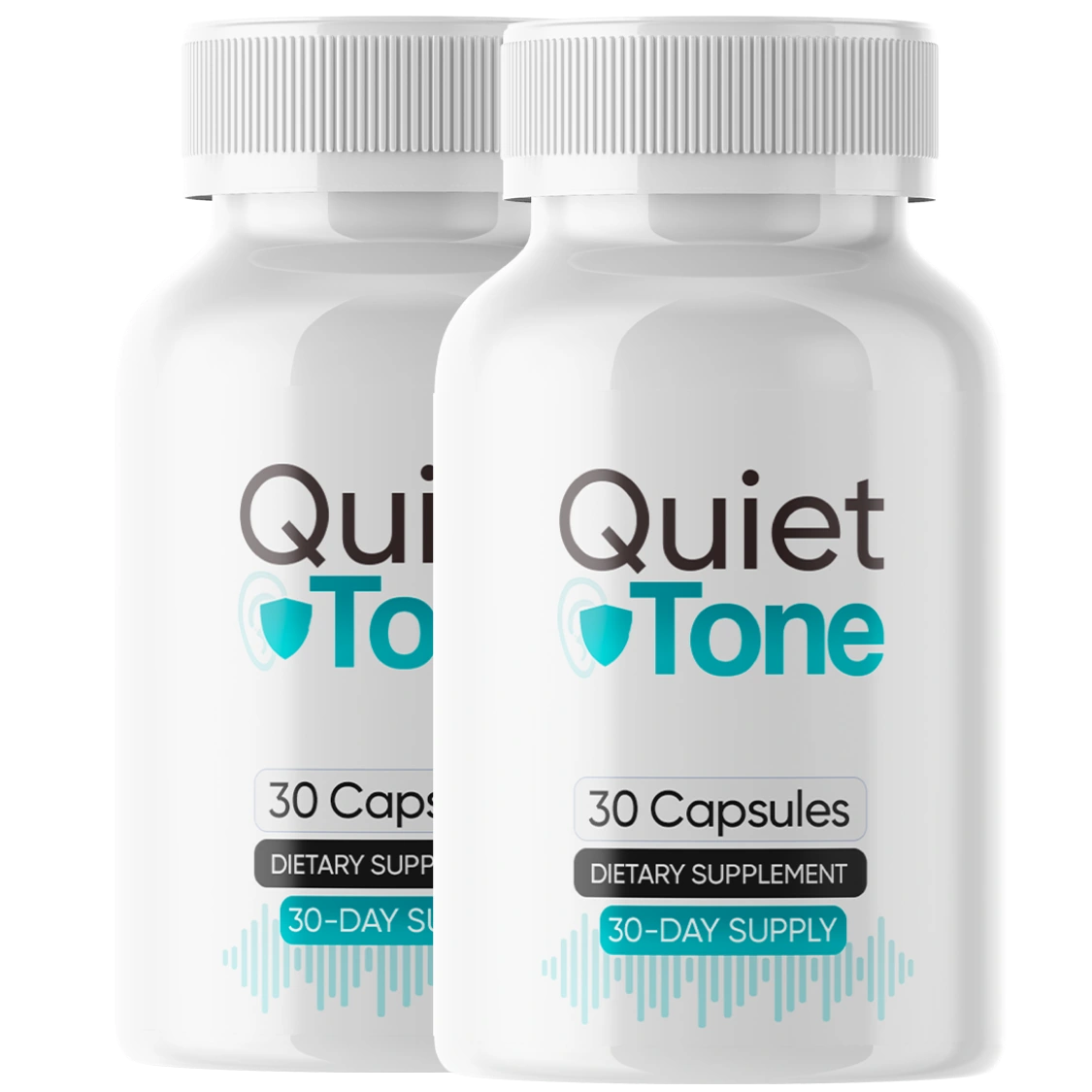
See the Quiet Tone panel for yourself
Nine printed rows with an amount and a percentage each, then one blend line of 415.5 mg across 18 names. The supplement facts page reproduces every row as the artwork prints it, footnote included.
Two bottles $158 · six bottles $294 · 180-day money-back guarantee
Order Quiet Tone On The Official WebsiteOne capsule a day · 30 per bottle · lot QUI-26/GO-5005
What the trials behind these same plants used
The comparison that makes the arithmetic mean something is not between ingredients. It is between this line and the doses the published research ran at.
| The ingredient | The dose its trial used | Against the whole 415.5 mg line |
|---|---|---|
| Chamomile | 1,500 mg a day, in generalised anxiety | More than three times the entire blend, for one of eighteen parts |
| Ashwagandha | 250 mg and 600 mg a day, dose-ranging | The larger arm is more than the whole line |
| Valerian | 530 mg twice daily, for sleep quality | One day’s dose is two and a half times the line |
| L-theanine | 200 mg a day, over four weeks | Roughly half the line, for one ingredient |
| Oat straw | 430 to 1,290 mg a day, dose-ranging | The low end is above the line; the high end is three times it |
| All eighteen together | — | 415.5 mg, about 23 mg each on an even split |
The left column is what the published studies used. Nothing here predicts what this capsule does; it establishes the scale the comparison happens on.
The chamomile trial is the clearest of them. It gave 1,500 mg a day to people with generalised anxiety, and 1,500 mg is more than three times this whole blend line, for a single one of its eighteen members.
The valerian sleep trial used 530 mg twice a day, so one day’s dose is around two and a half times the total on this panel. The ashwagandha dose-ranging study compared 250 mg with 600 mg and found the larger arm did more, which is the opposite of reassuring for a formula operating far below the smaller one.
L-theanine is the closest any of them comes. 200 mg a day over four weeks is roughly half this blend line, which would require L-theanine to be about half the formula on its own. It sits at position thirteen of eighteen.
Green oat was dose-ranged from 430 mg to 1,290 mg a day. The bottom of that range is already above the whole line.
What label order does and does not tell you
Descending order by weight is a real constraint and it is worth using. It means the rhodiola at position one weighs at least as much as the lutein at two, which weighs at least as much as the ashwagandha at three, and so on down to the 5-HTP at eighteen.
What it cannot do is produce a number. A blend could be 400 mg of rhodiola and eighteen specks of everything else, or it could be eighteen roughly equal portions, and both would print exactly the same line.
The useful reading is comparative rather than absolute. If you care about an ingredient near the bottom of the list, the order is telling you it is one of the smallest components of a small total, and that is usually all you needed to know.
- Position one is the largest single component, whatever that turns out to be.
- Position eighteen is the smallest, and on a 415.5 mg line it is a very small amount.
- Two adjacent positions can be almost identical or wildly different.
- The order says nothing about which ingredient the formula is built around.
- An ingredient you care about sitting low on the list is the most actionable thing the order gives you.
The nine rows that are not in the blend
It is worth stating the contrast rather than leaving it implied. The nine micronutrients on this panel each carry an amount and a percentage of the Daily Value, which makes every one of them checkable.
Thiamin at 6 mg and 500% of the Daily Value. Riboflavin at 6 mg and 462%. Niacin at 14 mg NE and 88%. B6 at 4 mg and 236%. Biotin at 150 mcg and 500%. Pantothenic acid at 8 mg and 160%. Calcium at 12.5 mg and 1%. Magnesium at 12.5 mg and 3%. Zinc at 12.5 mg and 114%.
That is nine rows a reader can take straight to a reference table or a trial, and it is more disclosure than a good deal of this aisle manages. The panel is half checkable and half not, and the half that is not is where most of the formula’s reputation lives.
How to read any blend line in a shop
- Find the total and the count. Divide one by the other. That is the ceiling on your expectations for any single member.
- Pick the one ingredient you actually care about and look up the dose its trial used. One lookup is usually decisive.
- Check its position in the list. Low position plus a small total is the clearest signal available.
- Look for anything with an interaction — St John’s wort, 5-HTP, a high daily zinc — because a blend hides those as effectively as it hides everything else.
- Compare the blend total against the printed rows. A panel where the checkable half is modest and the unchecked half is long is telling you where the marketing weight sits.
Done in that order the whole exercise takes about two minutes and resolves most labels in this aisle. A critical appraisal of how herbal remedies should be evaluated makes the broader case for reading formulas this way rather than by ingredient count.
What this arithmetic is not saying
It is not saying the blend is inert. An average of 23 mg is small against a trial dose, and small is not the same as nothing, particularly across eighteen ingredients that may or may not do anything together that none of them does alone.
It is not saying the label is misleading. Every requirement is met, the names are all there, the order is conventional and the total is declared.
It is saying that a reader who wants to know whether an ingredient on this panel is present at a researched amount cannot find out, and that where they can find out — the nine printed rows — the answer is mostly no. That is a fact about the panel rather than a prediction about anybody’s ears.
The clinical practice guideline for tinnitus advises clinicians not to recommend dietary supplements for persistent bothersome tinnitus. No arithmetic on this page changes that, and nothing here should be read as arguing with it.
References
- Mao JJ, Xie SX, Keefe JR, et al. Long-term chamomile (Matricaria chamomilla L.) treatment for generalized anxiety disorder: A randomized clinical trial. Phytomedicine. 2016;23(14):1735-1742. PMID 27912875. https://pubmed.ncbi.nlm.nih.gov/27912875/
- Salve J, Pate S, Debnath K, et al. Adaptogenic and Anxiolytic Effects of Ashwagandha Root Extract in Healthy Adults: A Double-blind, Randomized, Placebo-controlled Clinical Study. Cureus. 2019;11(12):e6466. PMID 32021735. https://pubmed.ncbi.nlm.nih.gov/32021735/
- Zare Elmi HK, Gholami M, Saki M, et al. Efficacy of Valerian Extract on Sleep Quality after Coronary Artery bypass Graft Surgery: A Triple-Blind Randomized Controlled Trial. Chin J Integr Med. 2021;27(1):7-15. PMID 33420602. https://pubmed.ncbi.nlm.nih.gov/33420602/
- Hidese S, Ogawa S, Ota M, et al. Effects of L-Theanine Administration on Stress-Related Symptoms and Cognitive Functions in Healthy Adults: A Randomized Controlled Trial. Nutrients. 2019;11(10). PMID 31623400. https://pubmed.ncbi.nlm.nih.gov/31623400/
- Kennedy DO, Bonnlander B, Lang SC, et al. Acute and Chronic Effects of Green Oat (Avena sativa) Extract on Cognitive Function and Mood during a Laboratory Stressor in Healthy Adults: A Randomised, Double-Blind, Placebo-Controlled Study in Healthy Humans. Nutrients. 2020;12(6). PMID 32485993. https://pubmed.ncbi.nlm.nih.gov/32485993/
- Izzo AA, Hoon-Kim S, Radhakrishnan R, et al. A Critical Approach to Evaluating Clinical Efficacy, Adverse Events and Drug Interactions of Herbal Remedies. Phytother Res. 2016;30(5):691-700. PMID 26887532. https://pubmed.ncbi.nlm.nih.gov/26887532/