Quiet Tone Official Website › Blog › The Two B Vitamins Left Out
The Two B Vitamins This Label Leaves Out
Six B vitamins sit on this panel with generous percentages beside them. The two with the most convincing hearing research are not among them, and one of the six that is here was tested and lost.
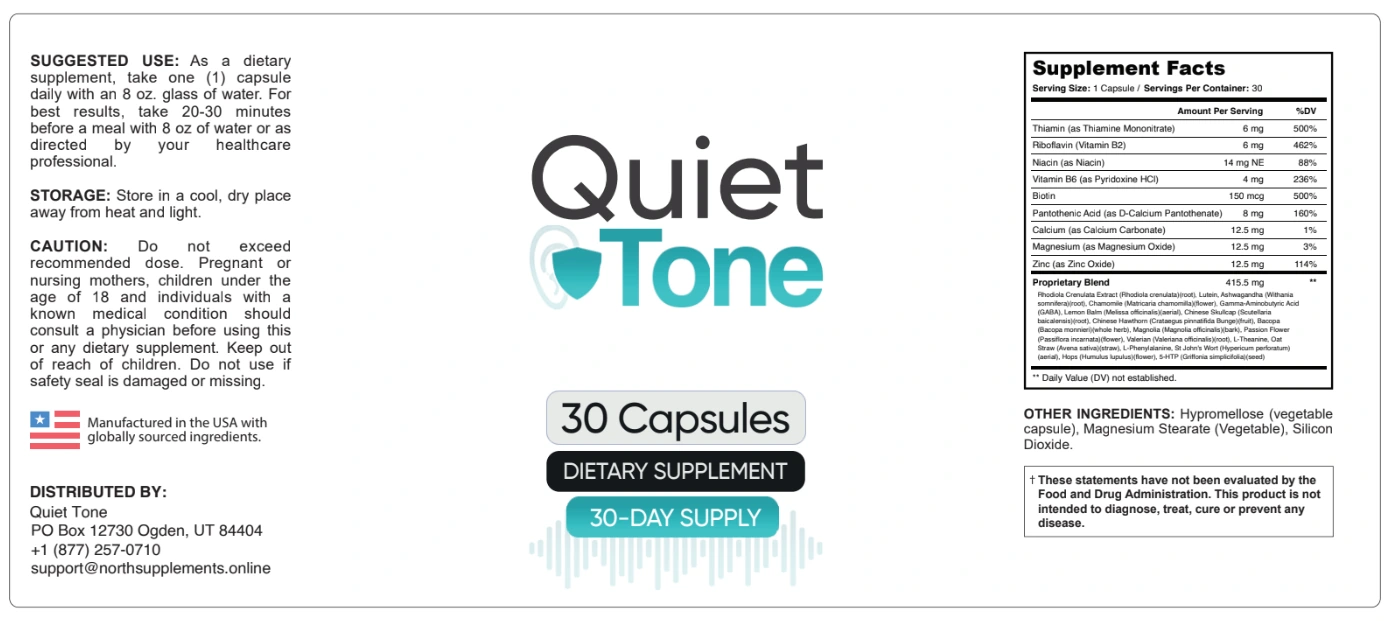
- Six B vitamins are printed here, several at four or five times the Daily Value.
- Folate is absent, and a three-year trial at 800 mcg a day slowed age-related hearing decline.
- B12 is absent, and its evidence used injections in deficient patients rather than capsules.
- Niacin is present and was tested in 48 people with tinnitus, where it did not beat placebo.
- A high percentage of the Daily Value is a statement about nutrition, not about ears.
The six that are here
Six of the nine printed rows on this panel are B vitamins. Thiamin at 6 mg, riboflavin at 6 mg, niacin at 14 mg NE, pantothenic acid at 8 mg, B6 at 4 mg and biotin at 150 mcg.
That is a recognisable B-complex arrangement and it is the shape of an energy or nervous-system formula. Nothing about it is unusual, and the amounts are the sort a multivitamin carries.
| B vitamin | On this panel | Hearing or tinnitus research |
|---|---|---|
| Thiamin (B1) | 6 mg, 500% DV | None found |
| Riboflavin (B2) | 6 mg, 462% DV | None found |
| Niacin (B3) | 14 mg NE, 88% DV | Tested in 48 people; did not beat placebo |
| Pantothenic acid (B5) | 8 mg, 160% DV | None found |
| Vitamin B6 | 4 mg, 236% DV | None found |
| Biotin (B7) | 150 mcg, 500% DV | None found |
| Folate (B9) | Not on this panel | 800 mcg a day for three years slowed age-related hearing decline |
| Vitamin B12 | Not on this panel | Studied by injection in deficient patients |
Six B vitamins printed with generous percentages, and the two with the better hearing evidence are the two that are absent.
Read the right-hand column and the pattern is stark. Five of the six B vitamins on this label were searched against hearing and tinnitus and nothing came back. The sixth was tested and lost. The two rows with the strongest hearing evidence in the entire B family are on the bottom two lines, and neither is on the bottle.
What a 500% figure means and does not mean
Thiamin at 500% of the Daily Value looks like a large number and it is worth being precise about what it represents.
The Daily Value for thiamin is small, 1.2 mg, because thiamin requirements are small. Six milligrams is five times that, which is a common supplement amount and is not a concern: the B vitamins here are water-soluble and excess is largely excreted rather than stored.
What a percentage tells you is how this row compares with a nutritional reference intake. What it cannot tell you is whether that nutrient does anything for the symptom the bottle is sold beside. Those are different questions and a large percentage answers only the first.
A panel of high percentages reads as a strong formula, and in nutritional terms it is a generous one. The mistake is carrying that impression across to a claim the panel never makes. A 500% figure is a nutrition statement.
Folate: the best result in this literature
The folic acid trial is the single most convincing study anywhere in the hearing supplement literature, and it is worth setting out properly because it is so often either ignored or overstated.
It ran for three years in adults with low dietary folate intake, gave 800 mcg of folic acid a day against placebo, and measured hearing thresholds. The folic acid group’s low-frequency hearing declined more slowly than the placebo group’s.
| The folic acid trial | What a capsule would have to match | |
|---|---|---|
| Dose | 800 mcg a day | 800 mcg of folate per serving |
| Duration | Three years | Three years of continuous daily use |
| Population | Adults with low dietary folate intake | The same, rather than the general public |
| Endpoint | Age-related decline in low-frequency hearing | Hearing thresholds, not the loudness of a ringing |
| Result | Decline was slower in the folic acid group | A slowing of decline, not a reduction in an existing symptom |
The best result in this whole literature, and the row that shows why it is not a tinnitus result.
Two things have to be said about that result at once, and leaving either out would be misleading.
The first is that it is real and well conducted. Three years is a long trial, the population was chosen sensibly, and the endpoint was measured rather than reported.
The second is that it is not a tinnitus result. It measured the rate at which hearing declines with age, in people whose diets were low in folate to begin with. Slowing a decline is a different outcome from quieting a ringing, and a reader who wants the first should not be sold the second.
B12, and the problem with the delivery route
The B12 work in tinnitus is the other absence worth naming. It studied patients with B12 deficiency and it delivered the vitamin by injection.
That delivery route is the whole difficulty. B12 absorption from the gut depends on a carrier protein and is limited, which is why injections exist in the first place and why deficiency is treated that way. A capsule cannot straightforwardly reproduce an injected dose.
So B12 is an ingredient with a signal behind it and a delivery problem in front of it, and a formula that included it would be making a weaker promise than the trial did. It is also worth saying that the population was deficient patients rather than anybody with a ringing in their ears.
Every Quiet Tone row, with the research beside it
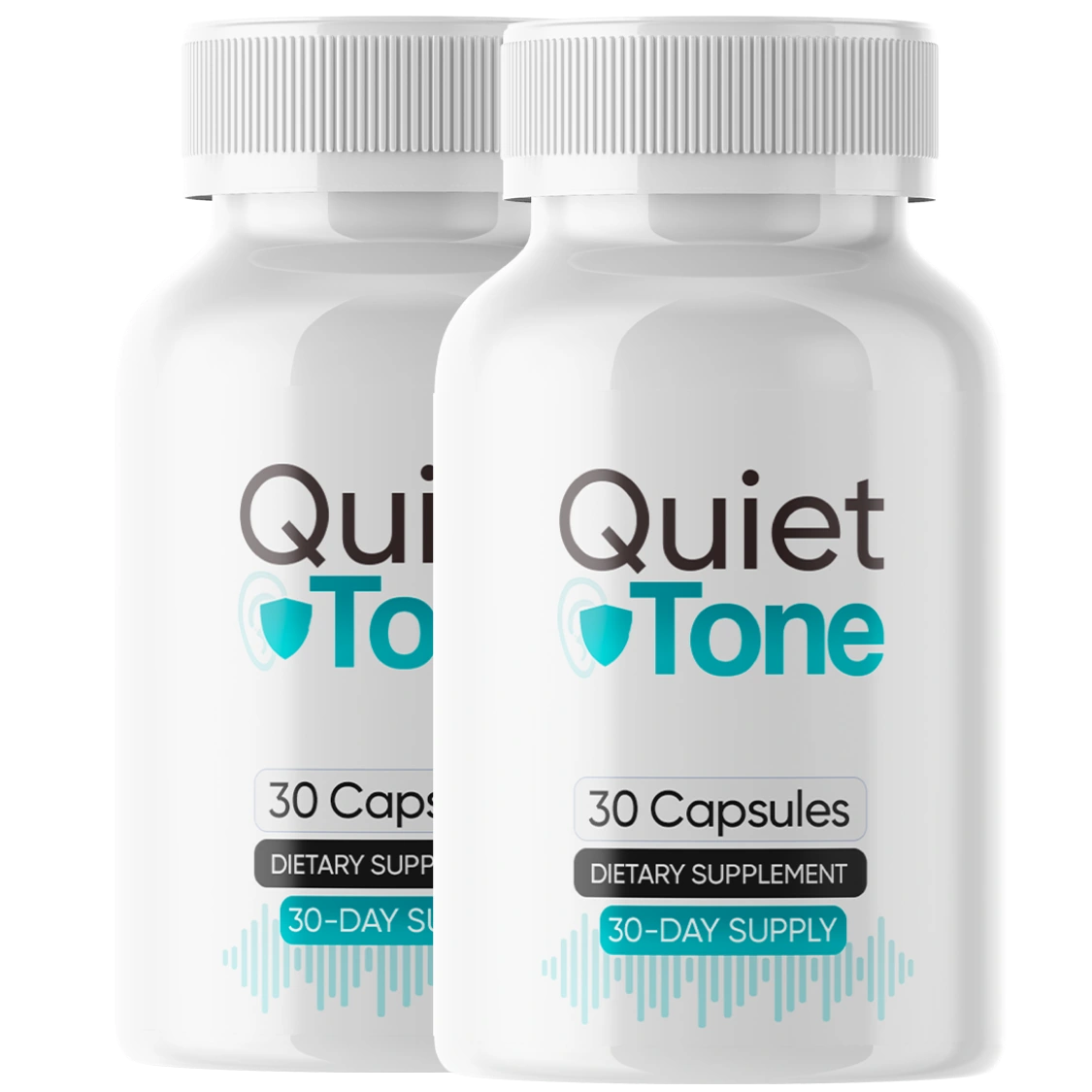
Nine printed amounts and one 415.5 mg blend line, each set against the dose its published study used. The ingredients page does it name by name.
Two bottles $158 · six bottles $294 · 180-day money-back guarantee
Order Quiet Tone On The Official WebsiteOne capsule a day · 30 per bottle · lot QUI-26/GO-5005
Niacin: the one that was tested
Niacin is on this panel at 14 mg NE and 88% of the Daily Value, and it is the only B vitamin here with a tinnitus trial behind it.
That trial gave nicotinamide against placebo to 48 people with tinnitus and reported that it did not beat placebo. Forty-eight is a small study and a single negative result in a small study is not the last word on anything, but it is the only word there is.
Niacin’s reputation in this aisle predates that trial and rests on vasodilation: niacin causes flushing, flushing is visible, and a visible physiological effect is persuasive in a way that an invisible one is not. The flush is real. The benefit was tested and was not found.
Why the two might have been left out
It is worth being fair about the omission rather than treating it as evidence of carelessness. Three explanations are plausible and none of them is sinister.
Folate at 800 mcg a day is a substantial amount and folic acid supplementation carries known cautions of its own, including the masking of B12 deficiency. A formulator choosing not to include it at a trial dose is making a defensible decision rather than an oversight.
B12 by capsule would not reproduce the trial and a formulator may reasonably have concluded there was no point pretending otherwise.
And the six that are here belong to a different design intent. This is a calm-and-sleep formula with a B-complex attached, and the B-complex is doing the job a B-complex usually does in such a product, which is nutritional support rather than hearing research.
That last point is the most likely explanation and it reframes the whole panel. This bottle is not built from the hearing literature. It is built from the relaxation literature, with nutrients alongside, and the absence of folate and B12 is a consequence of that design rather than a failure within it.
What to do with this if you are reading a panel
- Count the rows with hearing research behind them, not the rows in total. On most panels in this aisle the first number is very small.
- Check whether an absent ingredient is absent for a reason. Folate and B12 both have defensible reasons here.
- Treat a high Daily Value percentage as a nutrition figure and nothing more.
- Ask what the formula is actually built from. A calm-and-sleep stack with vitamins attached is a coherent product; it is simply not a hearing product.
- Read the guideline before the panel. The clinical practice guideline is the context everything else sits inside.
- If the symptom is new, one-sided, or arriving with hearing loss, that belongs in an examination rather than in a capsule. MedlinePlus sets out why.
The panel on this bottle is more honest than most in one specific respect: it does not claim to be a hearing formula. There is no structure or function sentence anywhere on the artwork. What it is, the panel states plainly enough for anybody prepared to read the right-hand column.
References
- Durga J, Verhoef P, Anteunis LJ, et al. Effects of folic acid supplementation on hearing in older adults: a randomized, controlled trial. Ann Intern Med. 2007;146(1):1-9. PMID 17200216. https://pubmed.ncbi.nlm.nih.gov/17200216/
- Singh C, Kawatra R, Gupta J, et al. Therapeutic role of Vitamin B12 in patients of chronic tinnitus: A pilot study. Noise Health. 2016;18(81):93-7. PMID 26960786. https://pubmed.ncbi.nlm.nih.gov/26960786/
- Hulshof JH, Vermeij P. The effect of nicotinamide on tinnitus: a double-blind controlled study. Clin Otolaryngol Allied Sci. 1987;12(3):211-4. PMID 2955964. https://pubmed.ncbi.nlm.nih.gov/2955964/
- Tunkel DE, Bauer CA, Sun GH, et al. Clinical practice guideline: tinnitus. Otolaryngol Head Neck Surg. 2014;151(2 Suppl):S1-S40. PMID 25273878. https://pubmed.ncbi.nlm.nih.gov/25273878/
- Tinnitus. MedlinePlus Medical Encyclopedia, U.S. National Library of Medicine. https://medlineplus.gov/ency/article/003043.htm