Quiet Tone Official Website › Blog › St John’s Wort In A Blend
St John’s Wort Inside A Calming Blend
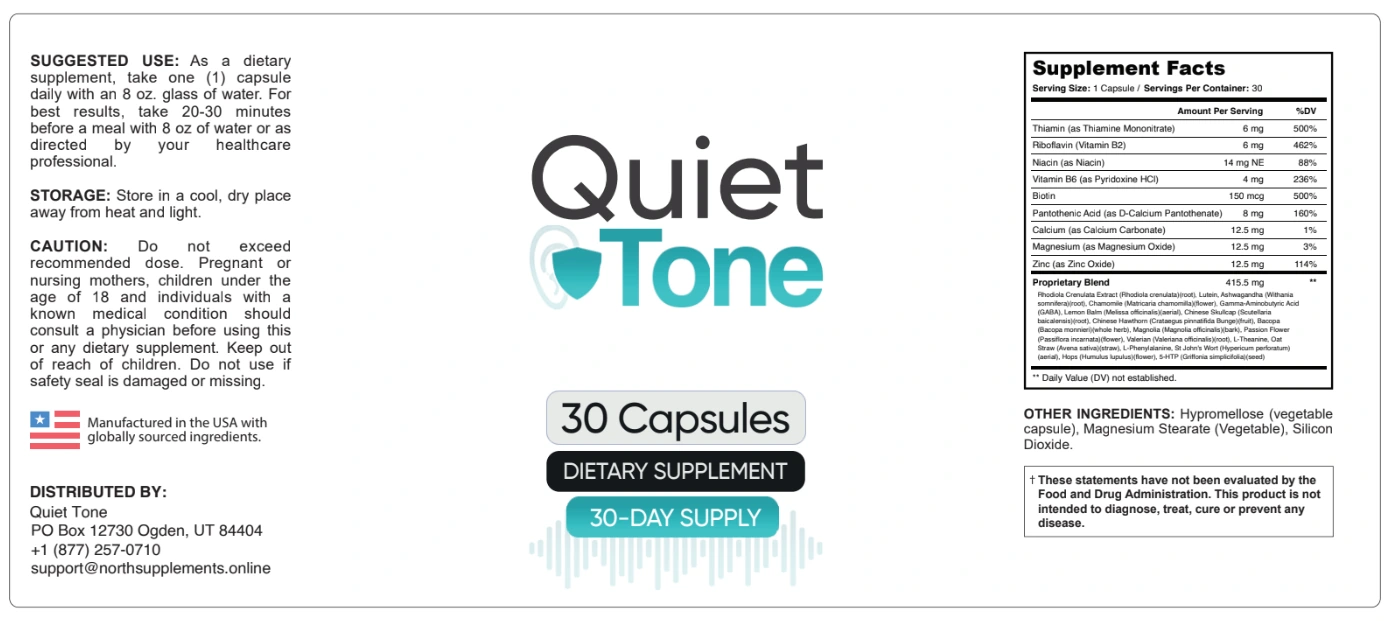
Sixteenth of eighteen names on one blend line, and easily the most consequential ingredient on this label. It changes how the body clears a long list of prescription medicines, and the panel publishes no amount for it.
- St John’s wort induces the enzymes and transporters that clear many prescription medicines, lowering their levels.
- Hormonal contraception is the best-documented example, and contraceptive failure has been reported.
- 5-HTP sits on the same blend line, so two ingredients acting on serotonin arrive in one capsule.
- No individual amount is published for either, because a proprietary blend is not required to publish one.
- Anyone taking any prescription medicine should raise this bottle with whoever prescribes it before the first capsule.
What St John’s wort is doing in a calm formula
Hypericum perforatum has a long history as a mood herb and a substantial trial literature in mild to moderate depression, where it has performed better than most botanicals manage. That is why it appears in formulas aimed at mood, stress and sleep, and its presence here is not eccentric.
In a blend built around relaxation it sits alongside valerian, hops, passion flower, chamomile and lemon balm, and a formulator reaching for a mood ingredient would reasonably reach for this one.
The difficulty is not what it does. The difficulty is what it does to everything else somebody might be taking.
The mechanism, in plain terms
Most prescription medicines are broken down by a family of liver enzymes, and many are moved in and out of cells by transporter proteins. The rate at which those enzymes and transporters work sets the concentration of a drug in the body.
St John’s wort induces several of them. Induction means the body makes more of the enzyme, so the drug is cleared faster and its concentration falls. The dose somebody is taking stays the same; the amount reaching the target does not.
That is the opposite of the interaction people usually picture. Nothing is amplified and nothing becomes toxic. A medicine quietly becomes less effective, which is harder to notice and, depending on the medicine, considerably more dangerous.
The NIH’s complementary health centre publishes a short plain-language summary of this, and it is the best first read for anybody who wants the whole picture without a pharmacology textbook.
Which medicines are affected
| Medicine group | What St John’s wort does to it | Why it matters |
|---|---|---|
| Hormonal contraception | Lowers circulating hormone levels | Breakthrough bleeding and contraceptive failure are documented |
| Anticoagulants and antiplatelets | Reduces drug concentration | A dose that was working may stop working |
| Immunosuppressants | Reduces drug concentration substantially | The interaction most likely to have serious consequences |
| Antidepressants | Adds a second serotonergic agent | Additive effects rather than reduced levels |
| Antiretrovirals and some cancer therapies | Reduces drug concentration | Named in the interaction literature as a group to avoid the combination in |
Drawn from the interaction literature cited below. This is a summary of a mechanism, not a list of everything affected.
The safety literature covers the range in more detail than a table can. The broad rule is that the more narrowly a medicine has to be dosed, the more the interaction matters: a drug with a wide safe range absorbs a reduction more forgivingly than one titrated carefully to an effect.
It is also worth saying what is not on that list. St John’s wort is not dangerous in itself at ordinary doses in people taking nothing else, beyond a well-known tendency to increase sensitivity to sunlight in some people. The issue is combination rather than toxicity.
Why the interaction is easy to miss
Nothing about it announces itself. A drug whose level has fallen does not produce a new symptom; it produces the gradual return of an old one, and the obvious explanation for a condition coming back is the condition rather than the capsule taken alongside it.
The timing works against noticing it too. Enzyme induction builds over days rather than arriving with the first dose, so the change is slow and the capsule has usually stopped being new by the time anything shifts. Somebody who started a supplement three weeks earlier is not the first suspect anybody reaches for.
The contraceptive interaction specifically
This one deserves its own section because of who it affects and how easily it is missed.
The contraceptive interaction is documented: St John’s wort lowers circulating levels of the hormones in combined oral contraceptives, and breakthrough bleeding and unintended pregnancy have both been reported in the literature.
The reason it is missed is structural. Somebody buying a capsule for a ringing in their ears is not thinking about contraception, the bottle does not mention it, and the ingredient is one name among eighteen on a line most people skim. There is no point in the purchase where the two facts are put together for them.
Putting them together is the reason this post exists. Anyone using hormonal contraception should read the blend line on this or any calm formula before starting it.
The contraceptive interaction is one of the better-documented herb-drug interactions in the whole literature, and it is the reason St John’s wort carries specific warnings in several countries. It is named here once, plainly, rather than hedged around.
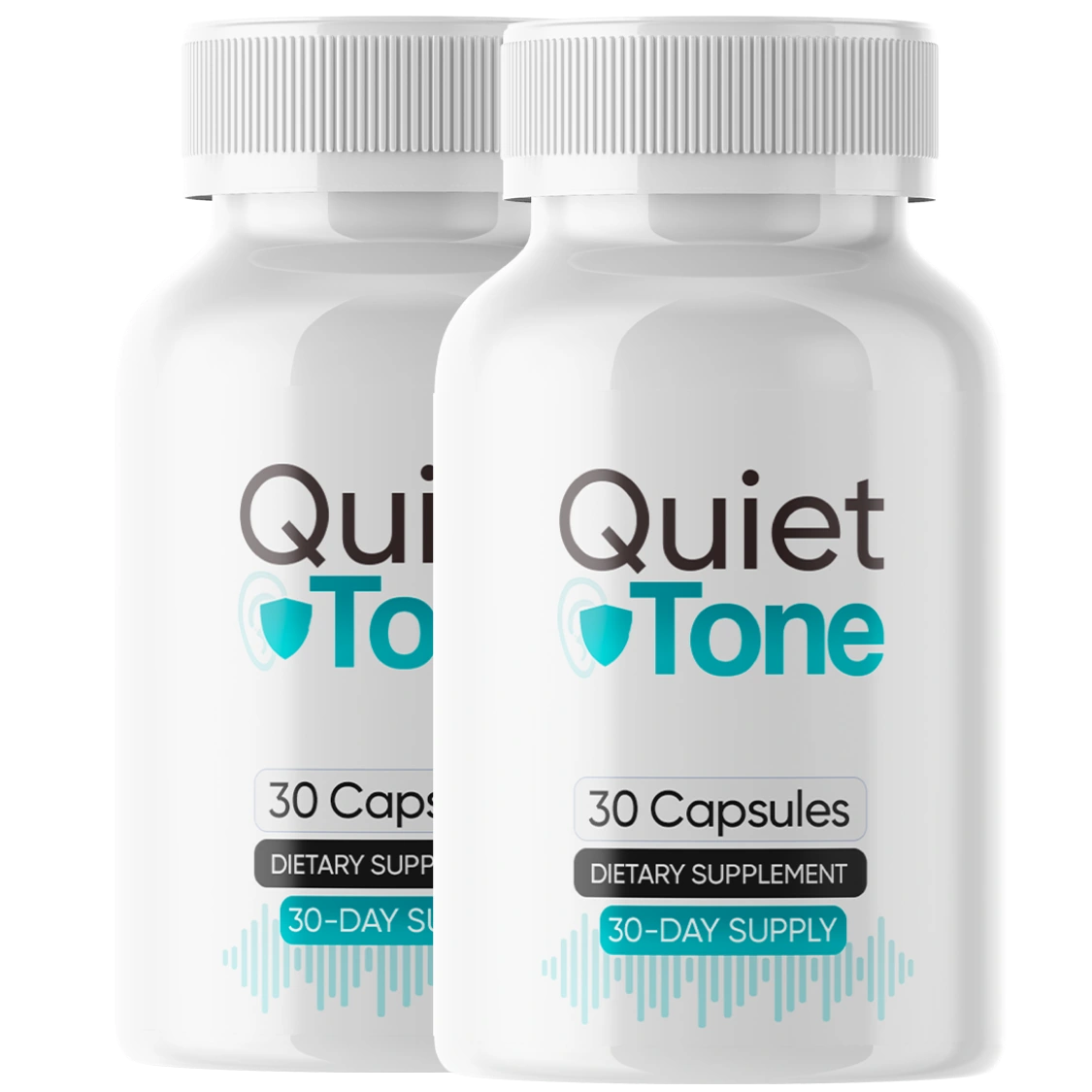
Read the whole Quiet Tone blend line first
Eighteen names on one 415.5 mg line, printed in label order. The ingredients page sets out every one of them with its plant part and the research behind it.
Two bottles $158 · six bottles $294 · 180-day money-back guarantee
Order Quiet Tone On The Official WebsiteOne capsule a day · 30 per bottle · lot QUI-26/GO-5005
5-HTP on the same line
Two positions further down the same blend line is 5-HTP, which is a precursor the body converts to serotonin.
The 5-HTP literature is its own subject and the ingredient is sold widely on its own. What makes it worth naming here is the pairing: St John’s wort also acts on serotonergic systems, so one capsule delivers two ingredients working on the same pathway.
For somebody taking nothing else, that combination is common in sleep and mood formulas and is not remarkable. For somebody already taking an antidepressant, it is a third serotonergic input, and it is the kind of thing a prescriber would want to know about.
Neither ingredient is present at a known amount, which is the next problem.
The problem a blend line creates here
| What a buyer can find out | From this label | What would be needed |
|---|---|---|
| That St John’s wort is present | Yes, it is named on the blend line | Nothing further; the name is printed |
| How much is present | Not available | An individual amount, which a proprietary blend need not publish |
| Whether the extract is standardised | Not stated on the artwork | A hypericin or hyperforin percentage |
| Whether the amount is enough to matter | Cannot be determined | Both of the above, plus the interaction threshold |
| That 5-HTP is in the same capsule | Yes, position eighteen on the same line | Nothing further; the name is printed |
The names are all disclosed. The amounts are not, which is what makes the question in the fourth row unanswerable from the bottle.
This is where a proprietary blend stops being a commercial preference and starts being a practical obstacle.
Everything a buyer needs in order to know that a question exists is printed: both names are there, in the label’s own words, at positions sixteen and eighteen. Nothing is concealed.
Everything a buyer would need in order to answer the question is absent. How much St John’s wort is in a capsule, whether the extract is standardised and to what, and whether the amount reaches a threshold where induction matters — none of those can be determined from the artwork, and a blend is not obliged to supply them.
The position on the line is the only clue available. Sixteenth of eighteen on a 415.5 mg total suggests a small amount, and small is reassuring rather than conclusive. Induction is not a simple dose-response and the honest position is that nobody reading this label can tell.
What to actually do about it
- Read the blend line before buying, not after. Both names are printed and both are easy to spot once you know to look.
- If you take any prescription medicine at all, mention this bottle to whoever prescribes it. That is one conversation, not a campaign.
- If you use hormonal contraception, treat that conversation as the deciding one rather than an optional extra.
- If you take an antidepressant, the 5-HTP and the St John’s wort are two separate reasons to ask rather than one.
- Bring the bottle or a photograph of the panel. An ingredient list beats a brand name every time, because the brand name tells a prescriber nothing.
- If you start it and something changes — a medicine that was working differently, unexpected bleeding — stop and say so.
None of that is a reason to be alarmed by a capsule. It is the ordinary discipline of taking a botanical alongside a prescription, and the only thing that makes it harder here is that the two ingredients in question arrive as names sixteen and eighteen on a line most people never read.
References
- Nicolussi S, Drewe J, Butterweck V, et al. Clinical relevance of St. John's wort drug interactions revisited. Br J Pharmacol. 2020;177(6):1212-1226. PMID 31742659. https://pubmed.ncbi.nlm.nih.gov/31742659/
- Berry-Bibee EN, Kim MJ, Tepper NK, et al. Co-administration of St. John's wort and hormonal contraceptives: a systematic review. Contraception. 2016;94(6):668-677. PMID 27444983. https://pubmed.ncbi.nlm.nih.gov/27444983/
- Soleymani S, Bahramsoltani R, Rahimi R, et al. Clinical risks of St John's Wort (Hypericum perforatum) co-administration. Expert Opin Drug Metab Toxicol. 2017;13(10):1047-1062. PMID 28885074. https://pubmed.ncbi.nlm.nih.gov/28885074/
- St. John's Wort. National Center for Complementary and Integrative Health, National Institutes of Health. https://www.nccih.nih.gov/health/st-johns-wort
- Maffei ME. 5-Hydroxytryptophan (5-HTP): Natural Occurrence, Analysis, Biosynthesis, Biotechnology, Physiology and Toxicology. Int J Mol Sci. 2020;22(1). PMID 33375373. https://pubmed.ncbi.nlm.nih.gov/33375373/
- Ng QX, Venkatanarayanan N, Ho CY. Clinical use of Hypericum perforatum (St John's wort) in depression: A meta-analysis. J Affect Disord. 2017;210:211-221. PMID 28064110. https://pubmed.ncbi.nlm.nih.gov/28064110/