Quiet Tone Official Website › Blog › Is Quiet Tone FDA Approved?
Is Quiet Tone FDA Approved? What The Label, The Seals And The Law Say
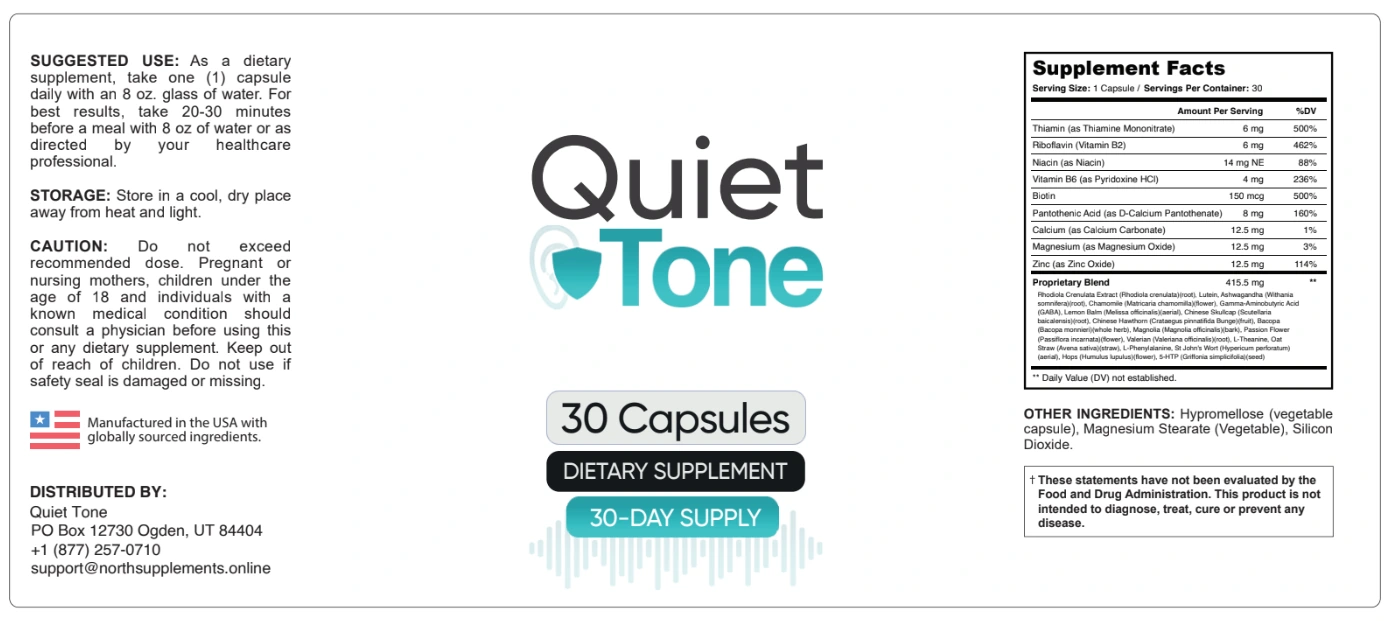
Quick answer. No. Quiet Tone is a dietary supplement, and no dietary supplement is FDA approved. The bottle carries the standard statement that its claims have not been evaluated by the FDA. The FDA-registered facility roundel on the pack describes a factory filing, not approval of the product.
- Quiet Tone is a dietary supplement, not a drug. It is not FDA approved, and no supplement is.
- The label says: These statements have not been evaluated by the Food and Drug Administration. This product is not intended to diagnose, treat, cure or prevent any disease.
- Four seals sit on the pack. Three of them name no organisation that you could look up.
- Lot QUI-26/GO-5005 and certificate reference QUI-5005-26-GO point to filings. They are not lab results.
- The printed label makes no structure or function claim: nothing about hearing, ringing, ears or sleep.
- No independent test result is published with the pack.
Is Quiet Tone FDA approved?
No. Quiet Tone is a dietary supplement, not a drug. No dietary supplement carries FDA approval, and Quiet Tone is no exception. The wording on the bottle matches that. It reads: These statements have not been evaluated by the Food and Drug Administration. This product is not intended to diagnose, treat, cure or prevent any disease.
If you ever see a page that implies approval, treat that as a red flag. A supplement can be sold without that approval, and the lack of it is not a sign of a problem. What it does mean is that nobody has checked the capsule's claims for you.
It also means this website cannot, and does not, say that Quiet Tone treats, reduces or quiets tinnitus. It does not claim to cure or prevent anything. For ringing in your ears, a doctor or audiologist is the right first step.
What does the FDA-registered facility seal mean?
One of the four seals on the pack is a blue roundel for an FDA-registered facility. This is the seal most often misread. A registration is a filing that a food facility makes so the agency knows it exists and can inspect it. It is never approval of a product.
The agency is named on the roundel. The facility is not. So a reader cannot look the factory up from the bottle. The seal tells you a filing exists, and nothing about what is in a capsule.
A facility can be registered and the product made there still be a supplement that is not FDA approved. The two words answer different questions.
What do the other three seals say, and who stands behind them?
Ask one question of any badge: whose name is on it? A seal with a name can be looked up. A seal with no name behind it works more like decoration. Here is how the four compare.
| Seal | Who is named | What a reader can do with it |
|---|---|---|
| FDA-registered facility | The agency, not the factory | Nothing directly. Registration is a filing, not approval |
| Good Manufacturing Practice (GMP) | Nobody. No certifying body, certificate number or audit date | Nothing. It is a statement of compliance by the party it describes |
| Foreign and domestic ingredients | Nobody, and no country | Nothing beyond the origin line in words: manufactured in the USA with globally sourced ingredients |
| Money-back satisfaction | This seller, with a phone line | Everything. A policy with a route can be tested by using it |
The satisfaction seal carries no day count of its own. The 180 days come from the seller's package cards.
The guarantee seal is the only one you can test, because there is a written refund route behind it. The remaining three are the maker describing its own process and sourcing. That does not make them false. It makes them claims.
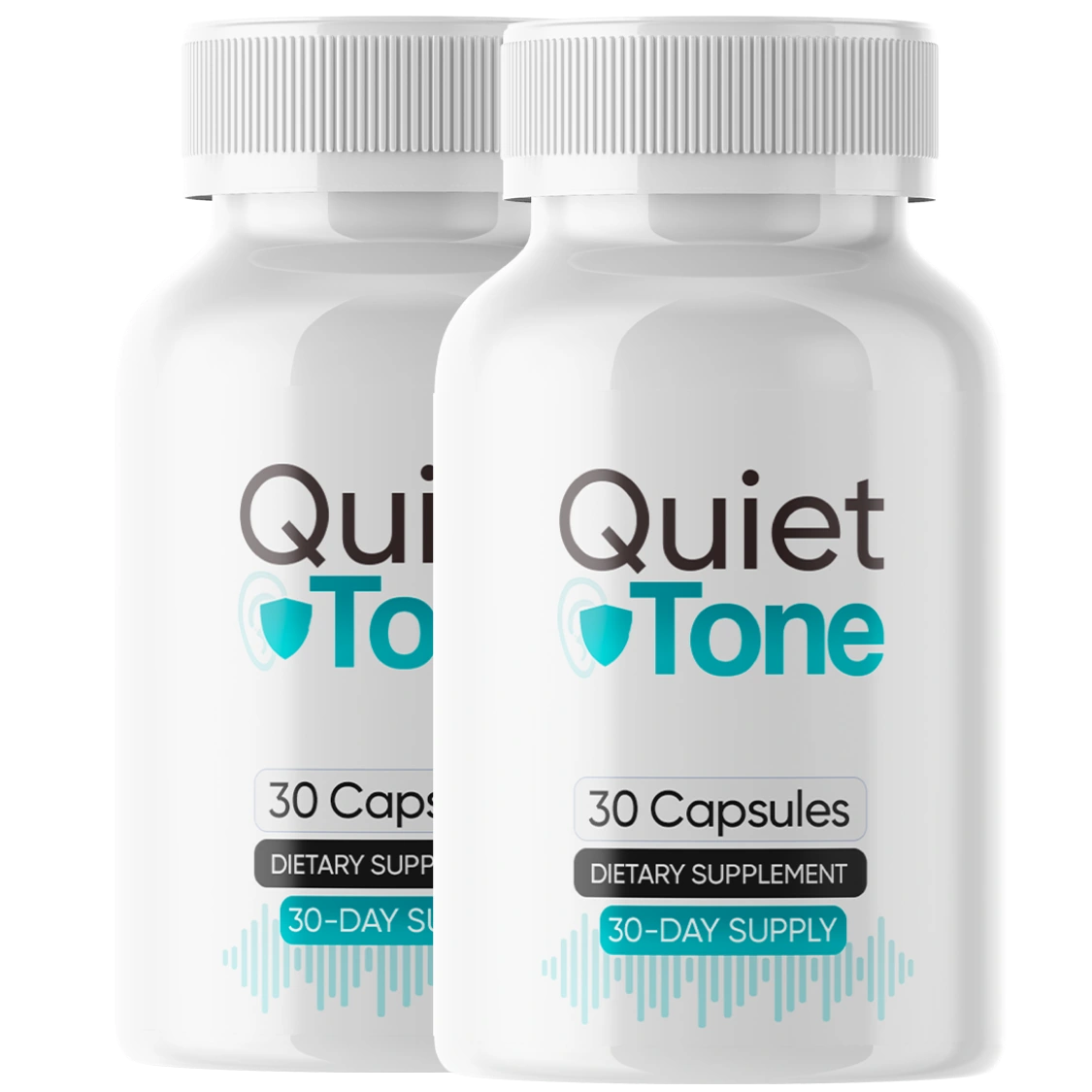
Want to see the terms behind the seals?
The order page shows the price, the pack options and the 180-day money-back terms, which are the one seal you can test by using it.
Two bottles $158 · three bottles $207 · six bottles $294 · 180-day money-back guarantee
See today's price and guaranteeDisclosure: this website is paid when an order is placed through it. Quiet Tone is a dietary supplement, not a drug, and it is not FDA approved.
What does the printed label claim about the body?
It claims nothing about the body. The artwork prints Dietary Supplement, 30 capsules, a 30-day supply, the suggested use, a storage line, a caution block, an origin line and the FDA statement. There is no sentence about supporting hearing, ears, ringing or sleep.
The front does show an ear inside a shield and a sound wave. Those pictures suggest a use the words never state. The tinnitus framing is carried by the seller's sales pages, and this website reports it as the seller's framing, not as a label claim.
That is why an FDA question and a hearing question get different answers. There is no hearing claim on the bottle for anyone to approve or reject.
Is Quiet Tone third-party tested?
No independent test result is published with the pack. This website holds certificate reference QUI-5005-26-GO, which is an index entry for a certificate, not the certificate. Lot QUI-26/GO-5005 ties a bottle to a production run, and both references help with traceability. Neither describes what is inside a capsule.
A lab report worth the name carries five things, and you can ask for them.
- The laboratory's name and accreditation, so someone answers for the report.
- A batch identifier that matches the lot on your bottle.
- The tests run, named one by one, such as identity, potency, heavy metals and microbial limits.
- A specification and a result for every test, shown together.
- A date and a signature.
To ask for the underlying certificate, contact the order desk on +1 (302) 200-3480. It can find your order and the filing attached to it.
What would make the quality story easier to check?
Six small changes would turn assertions into things a reader can verify.
- A named certifier, with a number and a date, on the GMP seal.
- An individual weight for each of the 18 blend ingredients.
- An extraction ratio and a standardisation marker beside each botanical.
- The certificate itself, with the laboratory named and the result beside each specification.
- A day count on the satisfaction seal that matches the package cards.
- A country of origin for the ingredients.
None of these is exotic. Listing them says more than any grade would. The same applies to the wider aisle. A Laryngoscope review of over-the-counter tinnitus products and a 2026 systematic review both look at how products in this space are marketed and what the evidence shows. Seals and badges are not a replacement for either.
Frequently asked questions
Is Quiet Tone FDA approved?
No. Quiet Tone is a dietary supplement, and no dietary supplement is FDA approved. The label carries the standard statement that its claims have not been evaluated by the Food and Drug Administration.
Does FDA-registered mean FDA-approved?
No. Registration means a facility has told the agency it exists, so the agency can inspect it. It is not approval of a product. The roundel on the pack names the agency but not the factory.
Who certifies the GMP seal on Quiet Tone?
Nobody is named on the pack. There is no certifying body, certificate number or audit date beside it, so it is a statement of compliance by the party being described.
Is Quiet Tone third-party tested?
No independent test result is published with the pack. The seller holds certificate reference QUI-5005-26-GO, which is a filing reference and not a lab report.
Does the Quiet Tone bottle claim to help hearing?
Not in words. The printed label has no structure or function sentence. The ear-in-shield mark and sound wave on the front are pictures, and the ringing-ears framing belongs to the seller's sales pages.
What does the satisfaction seal guarantee?
The seal itself carries no day count. The seller's package cards say 180 days from the date of purchase. One block of its review copy says 60 days, and this website works to 180.
Where does this information come from?
Statement and seal wording is taken from the label artwork and the seller's pack. The reviews below are the category sources that the seller's quality page cites.
- Vendra V, Vaisbuch Y, Mudry AC, et al. Over-the-Counter Tinnitus "Cures": Marketers' Promises Do Not Ring True. Laryngoscope. 2019;129(8):1898-1906. PMID 30585322. https://pubmed.ncbi.nlm.nih.gov/30585322/
- Menon R, Ziner J, Tolordava A, et al. Effectiveness of Over-The-Counter Treatments for Tinnitus Symptom Relief: A Systematic Review. Laryngoscope Investig Otolaryngol. 2026;11(2):e70398. PMID 41948711. https://pubmed.ncbi.nlm.nih.gov/41948711/
- Karkos PD, Leong SC, Arya AK, et al. 'Complementary ENT': a systematic review of commonly used supplements. J Laryngol Otol. 2007;121(8):779-82. PMID 17125579. https://pubmed.ncbi.nlm.nih.gov/17125579/
- Izzo AA, Hoon-Kim S, Radhakrishnan R, et al. A Critical Approach to Evaluating Clinical Efficacy, Adverse Events and Drug Interactions of Herbal Remedies. Phytother Res. 2016;30(5):691-700. PMID 26887532. https://pubmed.ncbi.nlm.nih.gov/26887532/
- Tunkel DE, Bauer CA, Sun GH, et al. Clinical practice guideline: tinnitus. Otolaryngol Head Neck Surg. 2014;151(2 Suppl):S1-S40. PMID 25273878. https://pubmed.ncbi.nlm.nih.gov/25273878/
Our view
The honest answer to the question in the title is short: no, and that is normal. What deserves more attention than the missing approval is what the pack puts in its place. There are four seals and three of them name nobody. There is a lot and a certificate reference, but no lab report.
That does not make Quiet Tone unsafe or dishonest. It means the quality case rests on the seller's word plus a refund route you can test. If that is enough for you, fine. If you take medicines, ask a pharmacist about St John's wort first. Remember too that this site earns from sales, so verify rather than trust.
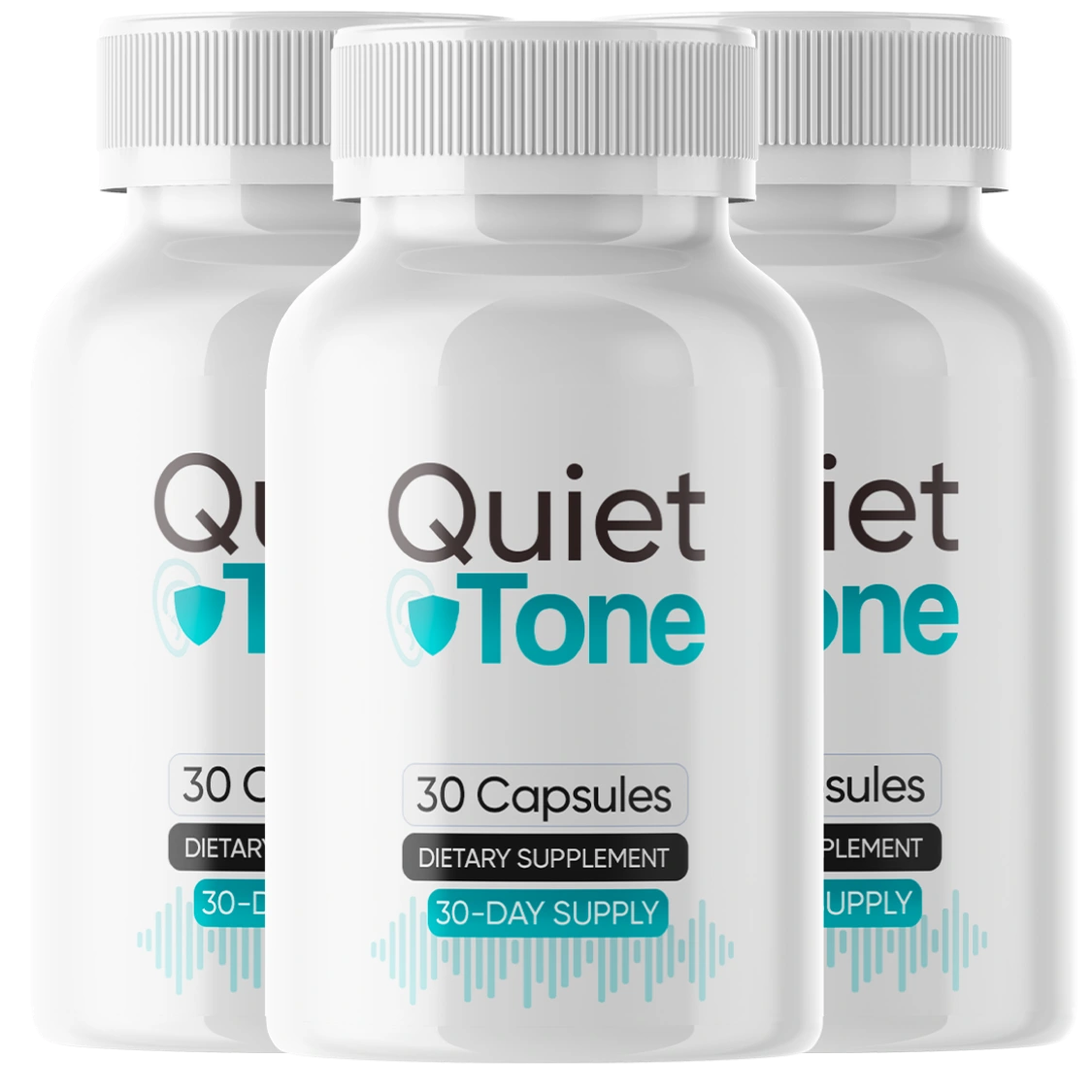
Seals are claims, so read them as claims
If you decide to try Quiet Tone, the order page shows today's price and the guarantee terms in full.
Two bottles $158 · three bottles $207 · six bottles $294 · 180-day money-back guarantee
See today's price and guaranteeDisclosure: this website is paid when an order is placed through it. Quiet Tone is a dietary supplement, not a drug, and it is not FDA approved.