Quiet Tone Official Website › Blog › How Long To Give It
How Long To Give A Calm Capsule Before Judging It
The trials behind these ingredients ran four to twelve weeks. Most people give a capsule about ten days and then decide from memory, which is the one method guaranteed to produce an answer nobody can trust.
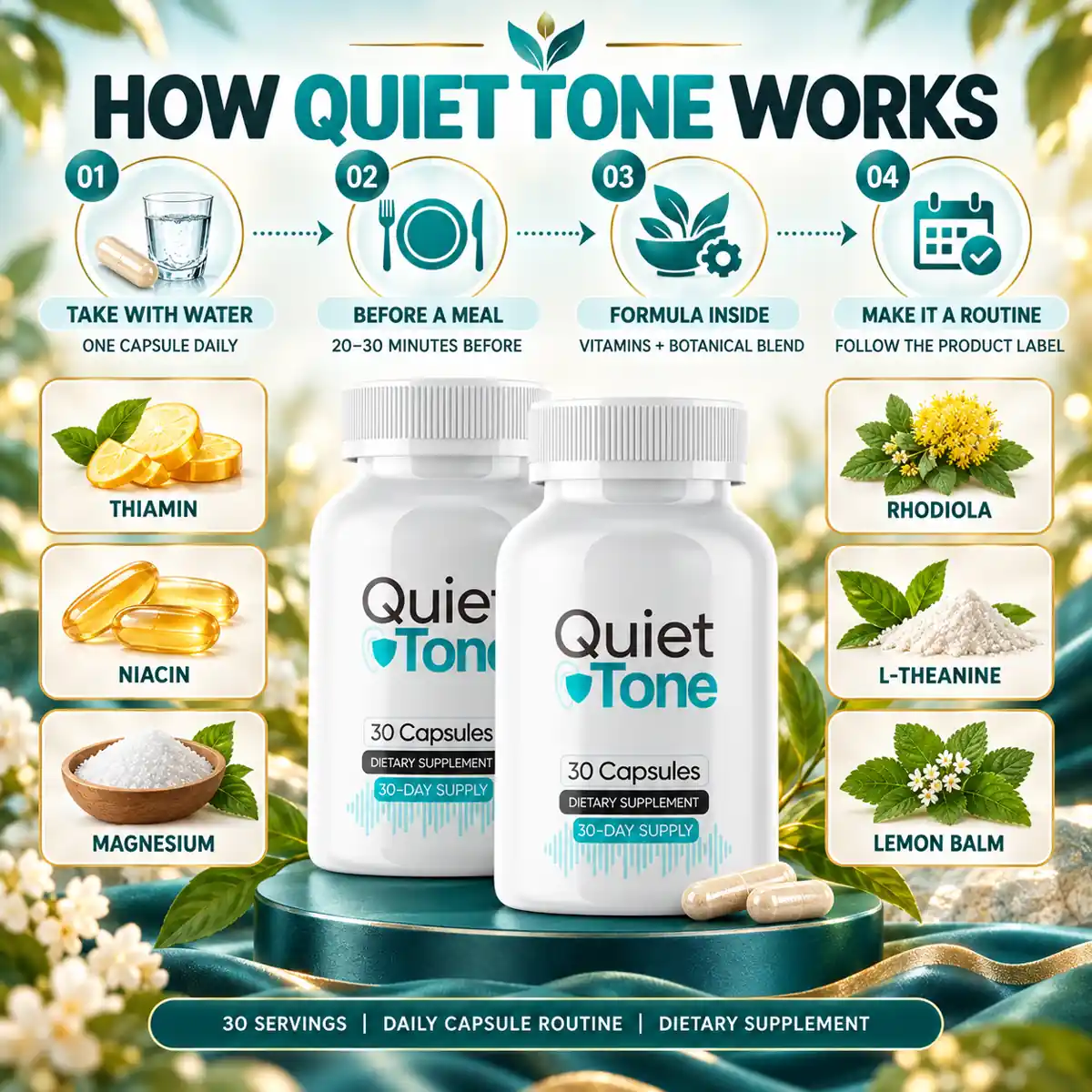
- The trials behind these plants ran four to twelve weeks, not ten days.
- Ringing fluctuates on its own, which is why a before-and-after from memory is close to worthless.
- Write down a baseline in the week BEFORE the first capsule. It is the most valuable week of the whole test.
- One bottle is thirty days and a reasonable first read. Two bottles is a fair verdict.
- The 180-day window is long enough to run a three-month test and still ask for the money back.
Why ten days is not a test
Almost nobody runs a supplement for as long as the research behind it ran. The usual pattern is a week or two of attention, a gradual loss of interest, a few missed days, and then a verdict formed somewhere around day twelve that the bottle did nothing.
That verdict may well be right. The problem is that it is unfalsifiable: it was reached before any of the underlying trials would have started measuring, using a comparison against a remembered version of how things were, on a symptom that moves week to week on its own.
A test that short cannot distinguish between a capsule doing nothing and a capsule doing something slowly. Since both of those are real possibilities, a method that cannot tell them apart is not worth running.
How long the research actually ran
| The trial | How long it ran | What that suggests about a fair test |
|---|---|---|
| L-theanine, stress and sleep | Four weeks | Four weeks is the shortest credible window in this group |
| Chamomile, generalised anxiety | Eight weeks at 1,500 mg a day | Eight weeks is a more typical length for an anxiety endpoint |
| Valerian, sleep quality | Short trials, pooled in an umbrella review | Sleep endpoints tend to move faster than mood endpoints |
| Bacopa, cognition | Twelve weeks | Twelve weeks, and it still missed its primary endpoint |
| Ashwagandha, stress | Eight to twelve weeks across the literature | Adaptogen claims are generally made over months, not days |
None of these studied this capsule. They establish how long the researchers behind these same plants thought a fair test needed to be.
The L-theanine trial is the shortest at four weeks, and it measured stress-related outcomes rather than anything to do with ears. The chamomile anxiety trial ran eight weeks at 1,500 mg a day, which is both longer and enormously larger than anything a blend line can deliver.
The bacopa trial is the instructive one. It ran twelve weeks, at 300 mg a day, and still missed its primary endpoint. Twelve weeks of a properly dosed single ingredient is a serious test, and it came back negative, which is a useful reminder that patience is necessary rather than sufficient.
The valerian umbrella review covers a set of mostly short trials, because sleep endpoints tend to move faster than mood or cognition endpoints. Where a formula is aimed at sleep, a shorter read is more defensible than it would be elsewhere.
Reviews of herbal insomnia remedies make a broader point that belongs here: the literature in this area is thinner and lower in quality than the shelf suggests, and one of the reasons is that the trials are short, small and inconsistently designed. A reader running a careful personal test is, oddly, doing something more rigorous than a fair number of published studies.
The reason memory is unreliable here
Tinnitus is an unusually poor candidate for a remembered before-and-after, for three reasons that compound each other.
It fluctuates. Loudness and intrusiveness vary with sleep, stress, caffeine, noise exposure and how quiet the room is, and a good fortnight followed by a bad one is entirely ordinary with nothing changing at all.
It is attention-dependent. The more you monitor it the more you notice it, which means the act of testing a capsule can make the symptom seem worse in week one purely because you are paying attention to it.
And it is remembered badly. Population work on how common tinnitus is finds that most of it is mild and intermittent, which is exactly the kind of experience memory smooths into a single impression rather than retaining as a series of nights.
A written count beats a recollection by a wide margin, and the gap is largest precisely where a symptom fluctuates. A tally on a phone takes five seconds a day and makes the difference between an opinion and a measurement.
The week before you start
The single most valuable thing anybody can do is also the one almost nobody does: spend seven days counting before the first capsule is swallowed.
It costs nothing, it delays the start by a week, and without it every later number has nothing to be compared against. A baseline is not administrative diligence; it is the only thing that turns a later count into evidence.
Keep it simple enough that it survives. Two numbers a day is plenty: roughly how long it took to fall asleep, and roughly how many times the ringing pulled your attention during waking hours. Precision matters far less than consistency.
- Seven days, before the first capsule.
- Two numbers a day, written somewhere you will not lose them.
- The same two numbers, measured the same way, for the whole test.
- Note anything unusual: a loud weekend, a bad week at work, a run of late nights.
- Do not adjust anything else at the same time. One change at a time or the test tells you nothing about either.
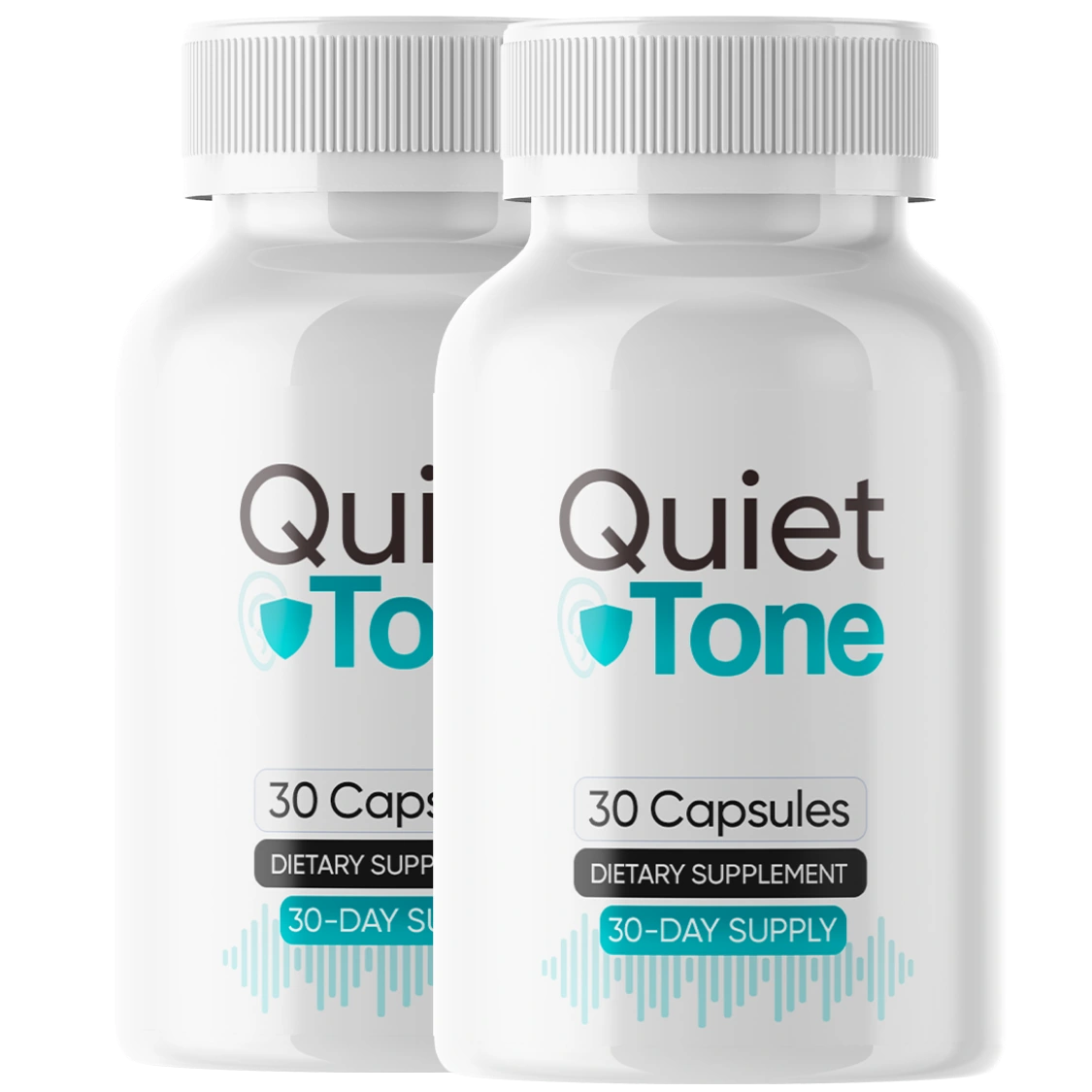
Three bottles is ninety days inside a 180-day window
Thirty capsules a bottle, one a day. The three-bottle pack covers a full three-month test and leaves three more months to ask for the money back.
Two bottles $158 · six bottles $294 · 180-day money-back guarantee
Order Quiet Tone On The Official WebsiteOne capsule a day · 30 per bottle · lot QUI-26/GO-5005
A test that fits inside the window
| Point in the test | What to do | What not to conclude |
|---|---|---|
| The week before you start | Count. How many nights it delays sleep, how often it intrudes in a day | Nothing yet. This is the baseline and it is the most valuable week |
| End of week one | Note whether the capsule fits the routine at all | Not whether it works. One week is shorter than any trial in the table above |
| End of bottle one, day 30 | Count again, the same way | A month is a reasonable first read and a poor final verdict |
| End of bottle two, day 60 | Count again, and compare all three counts | This is the first point where a comparison is worth much |
| Day 90 and beyond | Decide, with three months of counts in front of you | Still ninety days inside the window, which is the whole argument for counting |
The window runs 180 days from purchase, so a three-month test finishes with three months to spare.
The arithmetic behind that table is the practical argument for the middle pack. Ninety days of capsules inside a 180-day window leaves three clear months between the last capsule and the moment the window shuts.
Six bottles is cheaper a bottle and finishes the week the window closes, which is a tighter margin than most people want when a refund depends on the date. Two bottles is sixty days, which is a defensible test and a slightly short one against a twelve-week trial.
None of that is a reason to buy anything. It is the shape of the decision, set out so it can be made deliberately rather than by working out on day 175 that the last capsule has not been taken yet.
What is actually worth counting
Loudness is the obvious thing to measure and the worst. It has no units, it is attention-dependent, and a score out of ten on Tuesday is not comparable with a score out of ten three weeks later.
Three things count better. How long it takes to fall asleep, which is a number and which most people can estimate consistently. How many times in a day the ringing took your attention away from something else, which is a tally. And how many nights in a week it actually interfered with sleep, which is a small whole number and the easiest of the three to remember accurately.
- Minutes to fall asleep, estimated the same way each night.
- A tally of intrusions during the day, kept on a phone.
- Nights per week where it interfered with sleep.
- Caffeine after midday, yes or no, because it moves both of the first two.
- Anything exceptional: a concert, a flight, a fortnight of bad sleep.
Five things, four of which are a single character. The discipline is in doing it every day rather than in doing it elaborately, and a record kept casually for ninety days is worth more than a meticulous one abandoned in week two.
When to stop early, and when not to
There are good reasons to stop a test before it finishes and it is worth separating them from the bad ones.
Stop if something changes for the worse and does not settle. Stop if a prescribing conversation turns up an interaction, which on this blend line is a live possibility. Stop if the routine is not going to survive — a capsule that keeps being forgotten is not being tested, it is being stored.
Do not stop because week one produced nothing. Week one produced nothing in every trial in the table above as well, because week one was not when any of them measured.
And do not stop because of a bad fortnight in the middle. Fluctuation is the defining property of this symptom and a bad run inside a ninety-day test is data rather than a verdict. That is precisely what the baseline and the counting are for.
The honest last word belongs to the guideline rather than to a schedule. The professional guidance for this symptom does not recommend supplements at all, and a carefully run personal test does not change that. What it does change is whether the person running it ends up with an answer or with an impression.
References
- Hidese S, Ogawa S, Ota M, et al. Effects of L-Theanine Administration on Stress-Related Symptoms and Cognitive Functions in Healthy Adults: A Randomized Controlled Trial. Nutrients. 2019;11(10). PMID 31623400. https://pubmed.ncbi.nlm.nih.gov/31623400/
- Mao JJ, Xie SX, Keefe JR, et al. Long-term chamomile (Matricaria chamomilla L.) treatment for generalized anxiety disorder: A randomized clinical trial. Phytomedicine. 2016;23(14):1735-1742. PMID 27912875. https://pubmed.ncbi.nlm.nih.gov/27912875/
- Lopresti AL, Smith SJ. The Effects of a Bacopa monnieri Extract (Bacumen) on Cognition, Stress, and Fatigue in Healthy Adults: A Randomized, Double-Blind, Placebo-Controlled Trial. Clin Drug Investig. 2025;45(12):967-982. PMID 41091332. https://pubmed.ncbi.nlm.nih.gov/41091332/
- Valente V, Machado D, Jorge S, et al. Does valerian work for insomnia? An umbrella review of the evidence. Eur Neuropsychopharmacol. 2024;82:6-28. PMID 38359657. https://pubmed.ncbi.nlm.nih.gov/38359657/
- Leach MJ, Page AT. Herbal medicine for insomnia: A systematic review and meta-analysis. Sleep Med Rev. 2015;24:1-12. PMID 25644982. https://pubmed.ncbi.nlm.nih.gov/25644982/
- Jarach CM, Lugo A, Scala M, et al. Global Prevalence and Incidence of Tinnitus: A Systematic Review and Meta-analysis. JAMA Neurol. 2022;79(9):888-900. PMID 35939312. https://pubmed.ncbi.nlm.nih.gov/35939312/